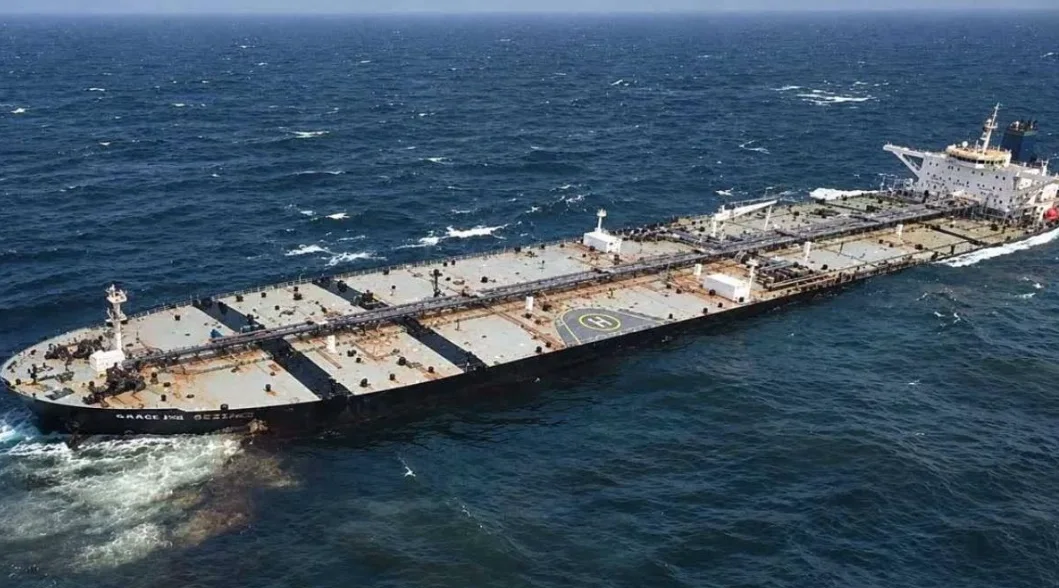
An enormous environmental emergency is developing off Oman after satellite images showed a sanctioned oil tanker sinking deeper into the sea while crude oil continues escaping from its damaged hull.
The Caroline Bezengi, a 274-metre tanker carrying close to one million barrels of crude, has remained grounded near Qibliyah Island since June. The vessel reportedly experienced an onboard explosion before becoming stranded in waters close to the Hallaniyat Islands, one of Oman’s environmentally important marine areas.
Imagery assessed on 7 August indicated that the tanker had settled lower into the water than before. Environmental observers fear this movement could place additional pressure on the hull, potentially opening new cracks or enlarging existing damage.
The scale of the contamination has grown at an alarming rate. Environmental groups examining satellite data estimated that the visible oil-affected area had expanded to approximately 800 square kilometres—far larger than measurements recorded during the previous weeks.
Oil has already reached the shoreline of Qibliyah Island. Seasonal winds, waves and monsoon currents could carry the pollution farther across the Arabian Sea, making containment increasingly difficult and spreading contamination beyond the immediate location of the ship.
The surrounding marine reserve supports sea turtles, dolphins, seabirds and the endangered Arabian Sea humpback whale. Thick crude can coat animals, poison feeding areas and smother sensitive coastal habitats. Even after the visible oil disappears, toxic substances may remain in sediments and marine food chains for years.
The tanker has been linked to the maritime network transporting Russian oil despite international restrictions. Its complicated ownership, management and sanctions status could make it difficult to establish who must finance the salvage operation and environmental cleanup.
Omani authorities have said they are monitoring and responding to the stranded vessel. However, publicly available information has not made clear how much oil has escaped, whether cargo is being removed or when the damaged ship can be secured.
The most dangerous possibility is that the tanker could break apart or sink completely with a substantial quantity of crude still aboard. Such an outcome could transform the existing spill into one of the region’s most serious marine disasters.