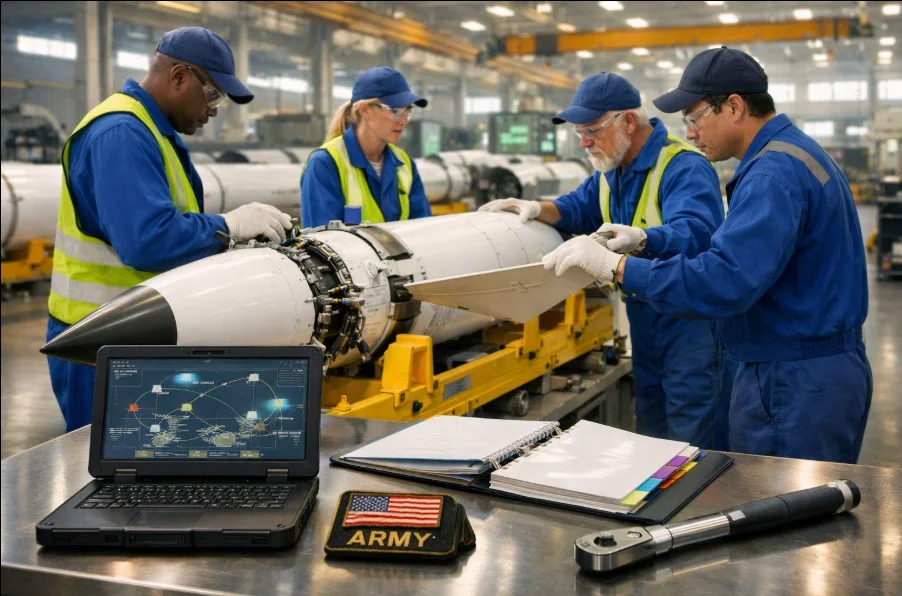
The United States military has placed its weapons manufacturers under intense pressure to produce ammunition and missile systems faster, revealing growing anxiety over the condition of the country’s military stockpiles.
Deputy Defense Secretary Steve Feinberg instructed industry leaders to submit plans within 21 days explaining how they could deliver critical weapons more quickly and expand production capacity. He warned that development schedules lasting several years were no longer acceptable.
The directive covers weapons needed to protect American forces and support ongoing military operations. Particular attention is being paid to sophisticated systems such as Patriot and Terminal High Altitude Area Defense interceptors, which are used to destroy incoming missiles.
The five-month conflict with Iran has placed additional pressure on these supplies. American forces have used costly interceptors to defend bases, ships and allied territories from missiles and drones, while the United States continues supporting security operations elsewhere.
President Donald Trump has publicly maintained that America possesses large quantities of ammunition and that manufacturers are delivering more. However, the Pentagon’s urgent message to contractors indicates that replacing certain advanced weapons is becoming a serious strategic priority.
Unlike ordinary ammunition, modern interceptors cannot be produced quickly by simply extending factory working hours. Their construction depends on specialised rocket motors, guidance electronics, explosives and components supplied by a limited network of manufacturers.
The production push could reshape defence spending and manufacturing far beyond the United States. Major contractors may need to expand factories, recruit more engineers and secure additional raw materials, while allied countries waiting for American weapons could experience longer delivery times.
Ukraine and several US partners also depend on American-made air-defence systems. If Washington prioritises rebuilding its domestic reserves, governments facing missile threats may have to compete for a limited number of interceptors.
The most alarming part of the development is not that the United States has exhausted its weapons it has not but that modern warfare can consume advanced missiles far more quickly than industry can replace them. The Pentagon is now demanding that this dangerous gap be closed before another crisis places even greater pressure on the supply chain.