What happened
Norwegian technology company Birdsview has secured €3.7 million, equivalent to NOK 40.5 million, in fresh investment to accelerate the international expansion and industrial scaling of its concrete-inspection technology.
The Bergen-based company has developed a system designed to give engineers a detailed view of what is hidden inside concrete structures.
Its approach has been described as an “MRI for concrete.”
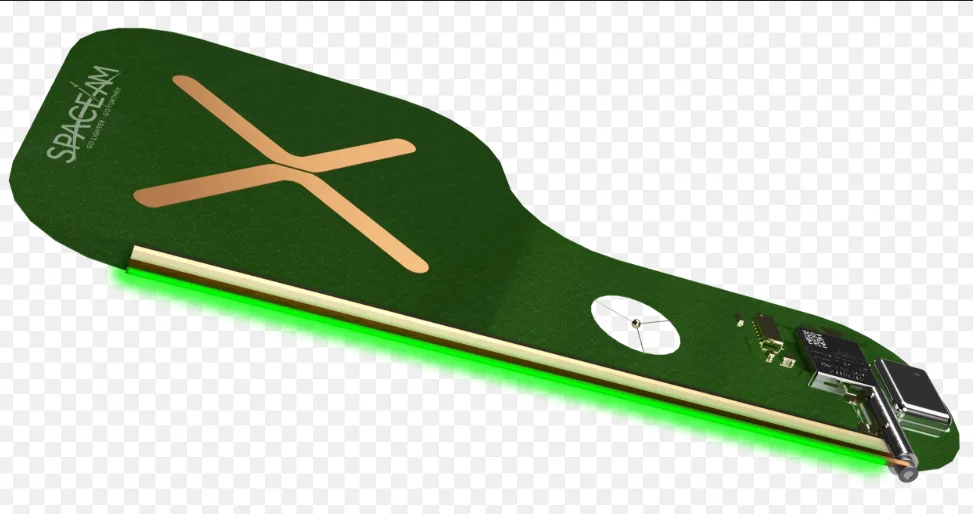
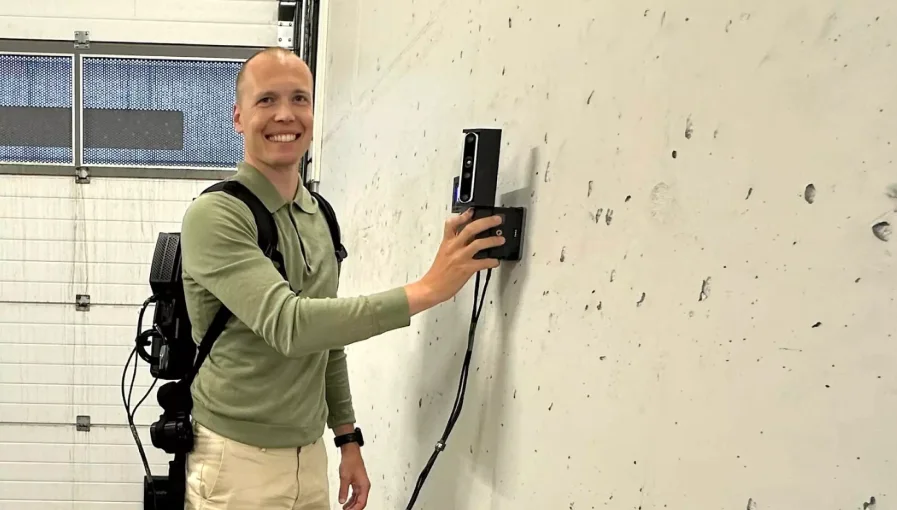
Instead of drilling holes into a bridge, building or other concrete structure to investigate what lies beneath the surface, Birdsview combines specialized sensors with proprietary algorithms that automatically process inspection data and generate detailed 3D models of the structure's interior.
That could allow engineers to identify reinforcement, structural features and potential problem areas while leaving the structure intact.
The financing round attracted a group of Nordic investors, including Sarsia, Butterfly Ventures, Proptechfonden, Kiilto Ventures, Nordic Makers and Momentum. Existing investors and individual backers also participated.
Birdsview CEO Olav Skogen said the new capital will allow the company to scale commercially and industrially across several countries.
Perhaps more importantly, the company says customers in eight countries have already selected Birdsview Concrete only weeks after its launch.
Why this matters
Europe has an enormous amount of ageing infrastructure.
Bridges, tunnels, parking structures, public buildings and other concrete assets need continuous inspection to determine whether they remain safe.
The problem is that understanding what is happening inside concrete can be difficult.
Traditional inspection may require drilling or other intrusive procedures. Engineers can also have incomplete information about exactly where reinforcement and other components are located within older structures.
Better non-destructive inspection technology could change that equation.
If engineers can produce accurate internal 3D maps without damaging structures, they may be able to make better decisions about maintenance, repairs and replacement.
That has financial implications as well.
Replacing a bridge or major concrete structure can cost far more than identifying deterioration early and repairing only the areas that need attention.
Extending the useful life of existing structures can also reduce the need for new concrete production, potentially lowering the environmental footprint associated with construction.
Who is affected
The technology could eventually affect a surprisingly broad section of Europe's economy.
Governments and municipalities responsible for bridges, tunnels and other public infrastructure could gain more detailed information before deciding where maintenance budgets should be spent.
Civil and structural engineers could receive clearer internal data when evaluating concrete structures.
Construction companies could potentially use the technology during inspections, renovation and quality-control work.
Infrastructure operators responsible for roads, railways, industrial facilities and other assets may be able to identify problems earlier.
And ultimately, ordinary citizens could benefit if improved inspection makes bridges and public structures safer while reducing disruptive emergency repairs.
Investors are also watching the opportunity.
Birdsview's latest funding round shows that infrastructure technology is becoming an increasingly attractive area for European technology investment, particularly when software and advanced sensing can solve expensive physical-world problems.
BoonVerse Analysis
The most interesting part of Birdsview's technology is that it demonstrates how the next wave of technological disruption may occur far beyond smartphones, social networks and chatbots.
Some of Europe's most important technology opportunities could involve making old physical infrastructure intelligent.
Consider a bridge built decades ago.
The structure itself may contain very little digital technology. Yet sensors, algorithms and 3D modelling can create a digital understanding of what is happening beneath its surface.
That changes how infrastructure can be managed.
Instead of following only fixed inspection schedules or conducting destructive tests, engineers could potentially build increasingly detailed digital records showing how structures change over time.
This could eventually allow infrastructure maintenance to become more predictive.
Rather than asking:
“Has this bridge become dangerous?”
engineers could increasingly ask:
“Which section is beginning to deteriorate, and when should we repair it?”
That difference matters enormously.
Europe has thousands of ageing bridges and other structures, while governments face limited infrastructure budgets. Technology that helps authorities repair the right structure at the right moment could potentially save substantial amounts of public money.
Birdsview's early international traction is therefore worth watching.
The company says customers across eight countries have already chosen its technology shortly after launch.
If those deployments demonstrate meaningful savings and reliable detection, the technology could move from a specialized engineering product toward a much broader infrastructure-management platform.
What happens next
The €3.7 million financing gives Birdsview resources to move beyond early commercialization.
The next challenge will be demonstrating that the technology works reliably across different infrastructure environments and can be deployed economically at scale.
Expansion beyond Norway will also be important.
Different countries have different infrastructure standards, procurement systems and inspection requirements, meaning international growth requires more than simply selling additional devices.
The strongest evidence will come from real projects.
If transport authorities, engineering companies and infrastructure owners demonstrate that the system can identify hidden problems faster or reduce unnecessary drilling and repairs, adoption could accelerate.
Birdsview could also benefit from a much larger European trend.
Governments are under increasing pressure to modernize ageing infrastructure while simultaneously controlling costs and reducing the environmental impact of construction.
Technology capable of extending the life of existing bridges and buildings sits directly at the intersection of those challenges.
For Birdsview, the €3.7 million announced on 17 August 2026 therefore represents more than another European startup funding round.
It provides the capital to test whether an idea that sounds almost futuristic—seeing inside concrete without breaking it open—can become an everyday engineering tool across Europe and beyond.
Sources
The funding announcement and technical details were reported on 17 August 2026 by EU-Startups, including the €3.7 million investment, participating investors, international adoption and Birdsview's description of its sensor-and-algorithm platform.