What happened
Uber and autonomous-delivery company Zipline announced a strategic partnership on Monday, 17 August 2026, aimed at bringing large-scale drone delivery to customers across the United States.
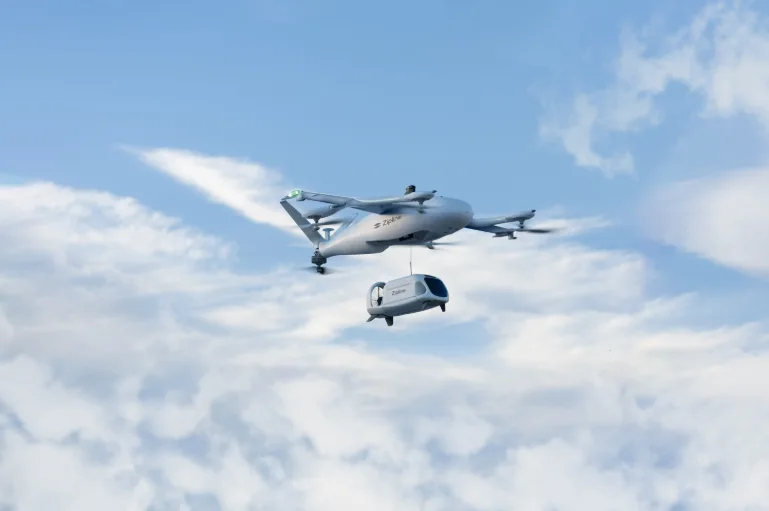
The companies plan to integrate Zipline's autonomous aircraft into Uber Eats, allowing eligible customers to choose drone delivery for orders in participating areas.
The first deployments are scheduled to begin later in 2026, followed by expansion across Zipline's existing markets and eventually dozens of U.S. cities.
But the companies have set a far more ambitious long-term target.
Together, they aim to reach one million drone deliveries per day by the end of 2029. Uber will also make a strategic investment in Zipline as part of the partnership, although today's announcement does not disclose the investment amount.
If achieved, one million daily deliveries would equal roughly 365 million deliveries a year.
That would push autonomous aerial delivery far beyond small pilot projects and toward becoming a genuine part of America's everyday logistics network.
Zipline says its aircraft can deliver products within roughly five to ten minutes in supported operations.
Why this matters
For years, drone delivery has been presented as technology that is just around the corner.
Today's announcement is different because it combines two companies that already possess important pieces of the infrastructure needed to make it work at scale.
Uber has an enormous network connecting consumers with restaurants and local merchants.
Zipline brings autonomous aircraft and years of operational experience.
The company says it has completed more than 2.7 million deliveries, transported more than 20 million items and flown over 135 million autonomous commercial miles. It currently operates across four continents.
Connecting that technology directly with Uber Eats could remove one of the biggest barriers facing drone-delivery companies: acquiring millions of customers individually.
Instead, the drone option can potentially appear inside an application people already use.
The technology could also change delivery economics.
Traditional last-mile delivery requires a person and vehicle to travel from a restaurant or store to each customer's destination. Autonomous drones could perform some shorter journeys without a conventional vehicle.
The companies argue this could reduce delivery times, costs, road traffic and emissions.
Who is affected
Uber Eats customers are the most obvious group.
People living in supported areas could eventually receive meals and everyday products by autonomous aircraft rather than conventional couriers.
Restaurants and small businesses could gain another delivery method. Uber says its network connects millions of consumers with hundreds of thousands of small businesses.
Delivery drivers and couriers could also be affected over the longer term.
Drone delivery is unlikely to replace every human delivery worker. Large orders, apartments, difficult locations, long journeys and many other situations may still require ground transportation.
However, small and lightweight orders travelling relatively short distances could increasingly be candidates for automation.
Local governments and aviation regulators will also play an important role because operating thousands of autonomous aircraft over populated communities introduces questions involving safety, airspace, noise and privacy.
BoonVerse Analysis
The most significant number in today's announcement isn't the speed of the drones.
It is one million deliveries per day.
That target reveals that Uber and Zipline are no longer treating drone delivery primarily as an experimental technology.
They are talking about industrial-scale autonomous logistics.
Uber is also building something potentially bigger than a drone-delivery service.
Its delivery network increasingly has multiple ways to move an order: human couriers, vehicles, sidewalk robots and now autonomous aircraft. Uber says its strategy is to match deliveries with the most appropriate transportation method.
That could eventually mean software decides how your order travels.
Imagine ordering lunch through an app.
The system evaluates distance, package weight, weather, traffic, cost and available transportation.
A nearby courier might receive one order.
A sidewalk robot could take another.
A drone could automatically receive yours.
The customer may care less about the technology than about one simple question:
Which method gets my order here fastest and cheapest?
That is where this partnership becomes particularly interesting.
The real competition may not ultimately be between drones and delivery drivers. It may be between logistics networks capable of intelligently coordinating humans, robots, autonomous vehicles and aircraft simultaneously.
If Uber successfully builds that orchestration layer, its technology could become increasingly important to how physical goods move through cities.
What happens next
The first major milestone comes later this year, when Uber and Zipline plan to begin their initial deployments.
Those early markets will provide important evidence about customer demand, delivery reliability and the economics of integrating autonomous aircraft into Uber Eats.
Expansion into dozens of American cities will require the companies to overcome regulatory and operational challenges.
Drone systems must operate safely around buildings, people, power lines, other aircraft and changing weather conditions.
Public acceptance will matter as well.
People may appreciate receiving products in minutes, but communities will expect aircraft operating above neighbourhoods to remain safe and sufficiently quiet.
The companies' ultimate target one million deliveries every day by the end of 2029 therefore remains highly ambitious rather than guaranteed.
But today's announcement provides a clear indication of where American delivery technology is heading.
The transformation of delivery may no longer be simply about replacing cars with drones.
It could be about creating an intelligent transportation network where people, vehicles, robots and autonomous aircraft work together and an algorithm decides which one should bring the package to your door.
Sources
The primary source is Uber’s official 17 August 2026 announcement. It confirms the partnership, Uber's planned investment, the first deployments later this year, planned expansion to dozens of U.S. cities and the target of one million daily drone deliveries by the end of 2029.
The announcement also provides operational figures for Zipline, including more than 2.7 million completed deliveries, over 20 million items transported and more than 135 million autonomous commercial miles flown