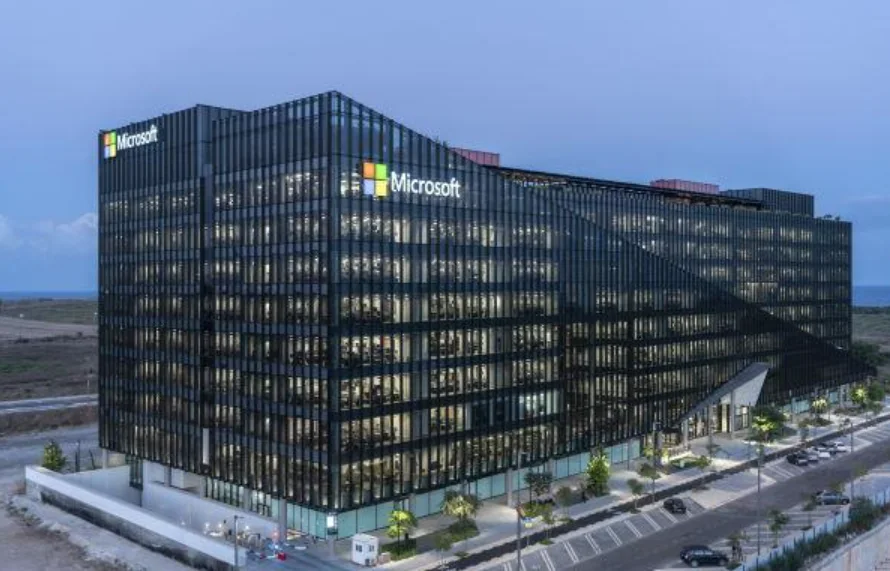
Microsoft has opened a major new gateway to artificial intelligence in India, launching its largest data-centre region in the country as demand for cloud computing continues to accelerate.
The Hyderabad hub, officially called the India South Central cloud region, becomes Microsoft’s fourth cloud region in India. It joins the company’s existing infrastructure in Mumbai, Pune and Chennai.
Two of India’s most influential corporations, HDFC Bank and Adani Group, are among the new facility’s early customers. Their participation demonstrates how AI and cloud services are moving beyond technology companies and becoming important infrastructure for banking, energy, transport and other major industries.
The Hyderabad region will allow organisations to store and process information closer to their Indian operations. Shortening the physical distance between users and computing infrastructure can improve service speed while helping businesses address security, compliance and data-residency requirements.
Microsoft says its Azure cloud business has achieved double-digit revenue growth in India during each of the past two years. The country has more than one billion internet users, a large population of software professionals and a rapidly expanding digital economy, making it one of the technology industry’s most valuable growth markets.
The company has committed approximately $20.5 billion to expanding its operations in India. The investment covers data centres, cloud capacity, artificial-intelligence services and the infrastructure required to support growing use of tools such as Microsoft 365 Copilot.
Opening the new region also intensifies Microsoft’s competition with Amazon and Google. All three companies are committing billions of dollars to facilities capable of training AI models, operating digital services and supporting businesses that no longer want to maintain their own computing hardware.
Microsoft’s strategy goes beyond providing storage space. Its data-centre regions connect customers to computing power, databases, cybersecurity services and generative-AI technology. Indian developers and companies will be able to build applications using these resources without depending exclusively on infrastructure located in distant countries.
Local cloud capacity could be particularly important for banks, healthcare providers, government institutions and other organisations handling sensitive information. Such customers often require strong controls over where their data is processed and how quickly their systems can recover from disruptions.
However, the rapid construction of large data centres also raises questions about electricity and water consumption. AI computing equipment generates substantial heat and requires extensive cooling, while dependable power supplies are essential for uninterrupted operation. Technology companies will face increasing pressure to explain how their expansion affects local resources.
The Hyderabad launch shows that the foundations of the global AI competition are being built far beyond Silicon Valley. India is emerging not only as a market for artificial intelligence but also as one of the places where the physical infrastructure supporting that technology will be concentrated.
For Microsoft, the new facility is a long-term bet that Indian companies, developers and public institutions will increasingly place cloud computing and artificial intelligence at the centre of their operations.