What happened
The British Film Institute announced on Monday, 17 August 2026, the 10 films selected for the Official Competition of the 70th BFI London Film Festival, where they will compete for the prestigious Best Film Award.
The announcement is one of the first major reveals ahead of the festival, which will take place from 7–18 October 2026.
This year's competition has a striking international reach, with 10 countries represented and filmmakers working across fiction, documentary, historical drama, horror and coming-of-age storytelling.
The 10 competing films are:
- 7 Miles Out — UK, directed by Carol Morley
- Act 3 — Ireland/UK, directed by Christine Molloy and Joe Lawlor
- Glaxo — Brazil/Argentina, directed by Benjamín Naishtat
- Imperium — Germany/France/Italy/Lithuania, directed by Sergei Loznitsa
- Ketticè — Italy, directed by Giovanni Tortorici
- Look Back — Japan, directed by Hirokazu Koreeda
- My Notes on Mars — Hungary/Austria, directed by Lili Horvát
- The Difficult Bride — France/Bangladesh/Portugal/Norway/Germany, directed by Rubaiyat Hossain
- The Idiot(s) — Germany/Poland, directed by Małgorzata Szumowska and Michał Englert
- Woman Unknown — Denmark/Latvia/Sweden, directed by May el-Toukhy.
All 10 will screen at BFI Southbank in London, with the winning film scheduled to be announced on Sunday, 18 October.
Why this matters
The announcement matters because the BFI London Film Festival is one of Europe's major international showcases for cinema.
But 2026 carries additional significance.
This is the festival's 70th edition, turning October's event into a milestone celebration of seven decades of international filmmaking in London.
The competition also gives films something increasingly valuable: visibility.
A strong festival reception can transform a production that is relatively unknown to general audiences into an international awards contender.
Reviews emerge.
Distributors pay attention.
Actors and directors receive greater exposure.
Audiences begin talking about films months before their wider releases.
And eventually, some titles can carry that momentum into other major awards campaigns.
This year's selection is particularly notable because established filmmakers are competing alongside voices bringing very different cultures, languages and subjects to London.
Who is affected
Filmmakers and producers receive the most immediate opportunity.
Being selected for the Official Competition places their work inside one of Britain's most visible film events and puts them directly in contention for the festival's Best Film Award.
British cinema receives significant representation through Carol Morley's 7 Miles Out and the Ireland-UK production Act 3.
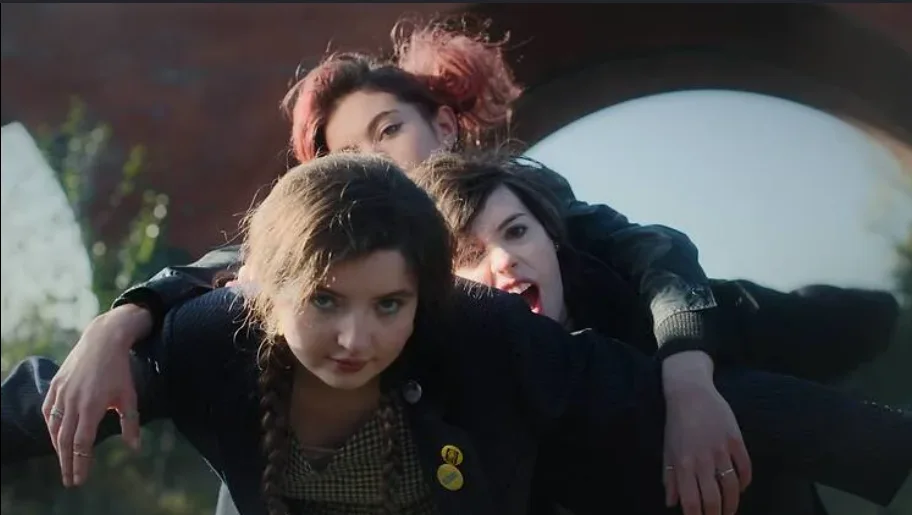
Morley's film is especially interesting because it adapts her semi-autobiographical novel and follows a young woman confronting her father's suicide while finding escape in the emerging new-wave punk movement of the 1970s and 1980s.
International cinema audiences will also encounter major new work from acclaimed filmmakers.
Japanese director Hirokazu Koreeda brings Look Back, a coming-of-age story about two girls united by their dream of becoming manga artists.
Sergei Loznitsa's Imperium uses archival footage shot by Italian cameramen in the Soviet Union during the early 1970s to examine imperialism and power.
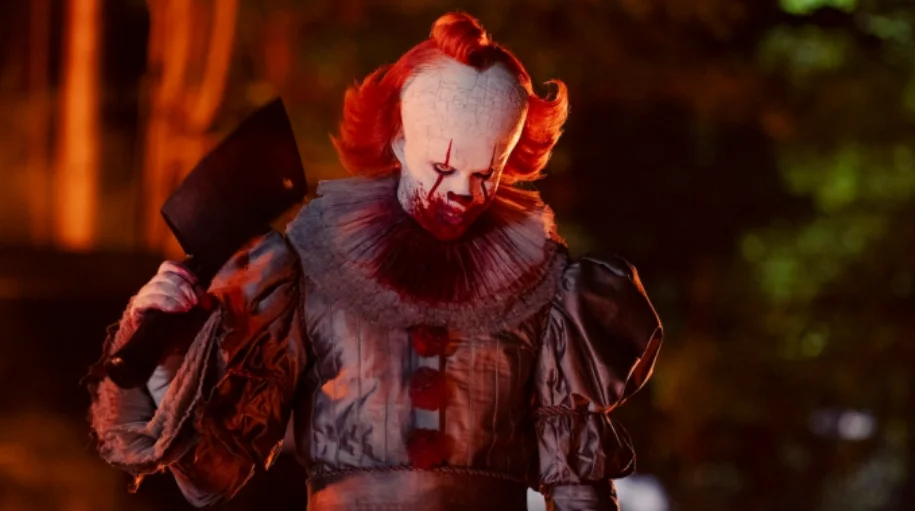
Meanwhile, Rubaiyat Hossain's The Difficult Bride brings feminist body horror into the competition through the story of a Bangladeshi bride confronting restrictive beauty expectations before her wedding.
London cinemas and audiences will ultimately become the meeting point for all these different filmmaking traditions when the festival begins in October.
BoonVerse Analysis
Ten films.
Ten countries represented.
One Best Film award.
But the most important part of today's announcement may be the extraordinary range of stories competing against one another.
One film examines manga and friendship.
Another investigates Soviet imperial history.
Another confronts beauty standards and patriarchy through body horror.
Another revisits Dostoevsky.
Another explores grief through Britain's new-wave punk culture.
That diversity demonstrates why film festivals still matter in an entertainment economy increasingly dominated by algorithms.
Streaming platforms are extraordinarily good at giving audiences more of what they already watch.
Film festivals can do something different.
They can put something completely unfamiliar in front of an audience and effectively say:
Watch this.
That discovery function has become increasingly important.
Hollywood's largest franchises can spend hundreds of millions of dollars making audiences aware that a movie exists.
Independent and international filmmakers rarely possess that luxury.
Festival selection becomes part of their marketing infrastructure.
A strong reception in London can generate reviews and industry attention that would otherwise cost enormous amounts to create.
The 70th anniversary also arrives at an interesting moment for cinema.
Streaming has transformed viewing habits.
Artificial intelligence is beginning to transform production.
Traditional theatrical businesses continue adjusting to changing audience behaviour.
Yet film festivals continue bringing people physically together to discover new stories.
That makes London's milestone edition more than a celebration of the past.
It is also a demonstration that cinema's communal experience still has considerable cultural power.
What happens next
Today's Official Competition announcement is only part of the programme.
The BFI says the complete 70th London Film Festival programme will be unveiled on Wednesday, 2 September 2026.
More competition announcements are also coming.
Films shortlisted for the Grierson Award for Best Documentary, Sutherland Award for Best First Feature and Short Film Award will be revealed in September.
The festival's awards juries will also be announced in the coming weeks.
General ticket sales are scheduled to begin on 17 September, with BFI members receiving earlier booking access.
Then London takes over.
The festival opens on 7 October and runs until 18 October, when the Official Competition winner will be revealed.
Previous winners of the Best Film Award include major filmmakers such as Jacques Audiard, while recent champions include Ryusuke Hamaguchi's Evil Does Not Exist, Adam Elliot's Memoir of a Snail and Lucrecia Martel's Landmarks.
One of today's 10 newly announced contenders will join that list.
The intriguing part is that audiences do not yet know which one.
That discovery begins when the lights go down in London this October.
Sources
The primary source is the British Film Institute's official announcement published 17 August 2026, confirming the 10 Official Competition films, participating filmmakers and countries, festival dates, forthcoming programme announcements and the 18 October Best Film decision.
BFI — Official Competition films announced for the 70th BFI London Film Festival