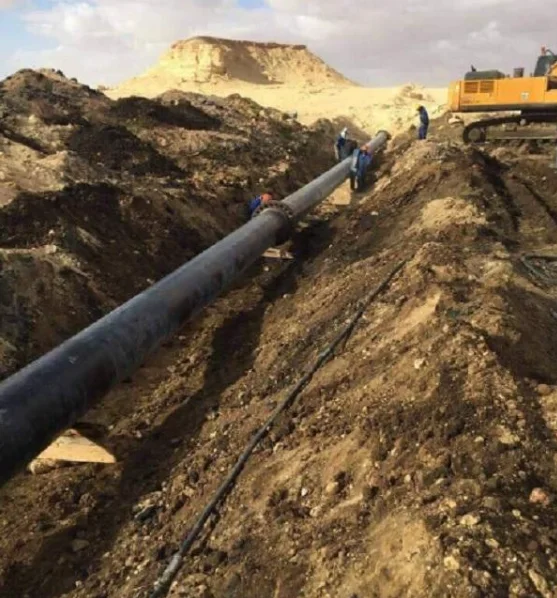
Oil began flowing again through Libya’s Zaqout–Sidra pipeline early Saturday after emergency teams contained a leak discovered during a routine inspection.
Waha Oil Company said workers brought the problem under control within 24 hours of detecting it. Pumping resumed at approximately 4 a.m. on 8 August after the company determined that repairs had been completed and the affected section was safe to operate.
The company did not immediately disclose the volume of oil released, the precise cause of the leak or whether surrounding land had been contaminated. Those details will be important in determining the environmental and financial effects of the incident.
The pipeline connects production areas operated by Waha with the Sidra export terminal on Libya’s Mediterranean coast. Sidra is a critical outlet through which crude is stored and transferred onto tankers for delivery to international customers.
Under normal conditions, Waha produces between 340,000 and 400,000 barrels of oil per day. Even a temporary disruption can affect storage schedules, tanker loading and Libya’s overall export performance if crude cannot move efficiently from oilfields to the coast.
The quick repair therefore prevented the leak from developing into a larger commercial problem. A lengthy shutdown could have forced the company to reduce production while storage facilities filled, potentially removing hundreds of thousands of barrels from the market each day.
Waha operates as a subsidiary of Libya’s state-owned National Oil Corporation through a partnership involving French energy company TotalEnergies and American producer ConocoPhillips. The presence of these international companies makes the pipeline’s reliability important to both Libyan revenue and foreign investment.
Oil remains the foundation of Libya’s public finances and export economy. Pipeline failures, political disagreements, armed confrontations and temporary blockades have repeatedly interrupted production during the country’s years of instability.
The incident also demonstrates the value of preventative inspections. Detecting the leak before it caused a major rupture allowed repair teams to respond rapidly and limited the time during which pumping was suspended.
Attention will now turn to whether the damaged section requires additional maintenance and whether similar weaknesses exist elsewhere along the pipeline. Aging energy infrastructure can create continuing operational and environmental risks if repairs address only the immediate failure.
The successful restart provides short-term relief, but sustained investment in monitoring, corrosion control and pipeline replacement will be necessary to protect Libya’s oil income and maintain confidence among international buyers.