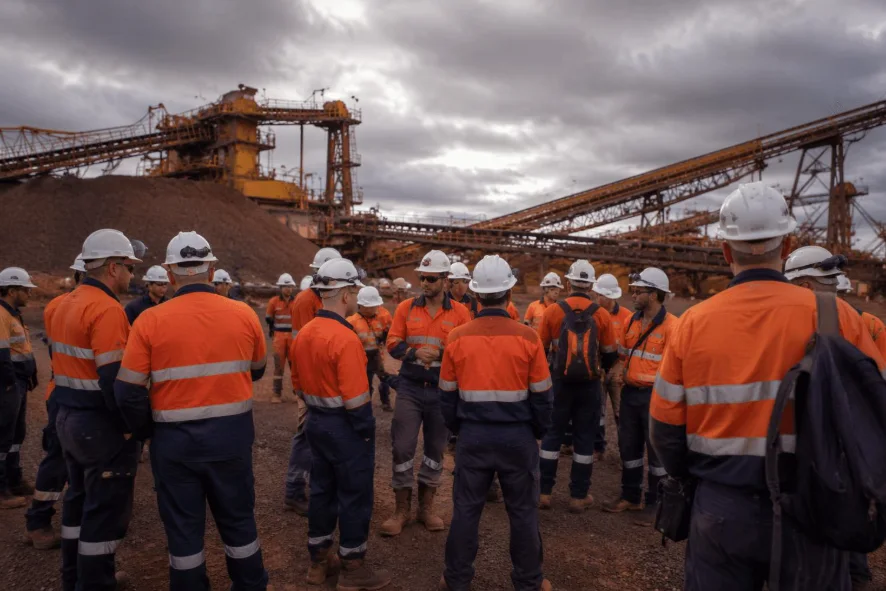
A labour dispute has reached one of the most important points in the global mining supply chain, with workers beginning a two-day strike at BHP’s operations in Port Hedland, Western Australia.
The industrial action started on Saturday, 8 August, when employees responsible for loading iron ore onto ships imposed a 24-hour ban on that work. A broader 24-hour stoppage involving members of three unions was scheduled to follow on Sunday.
Approximately 150 workers were expected to participate across the two days. They include operators and maintenance employees represented by the Combined BHP Ports Unions, which has been negotiating with the mining company for more than seven months.
Port Hedland is not an ordinary industrial facility. It is the world’s largest iron-ore export hub and handled about 75% of all iron ore shipped from Western Australia’s Pilbara region during the year ending in June.
BHP alone moves approximately $80 million worth of iron ore through the port each day. The material is shipped primarily to steel producers in Asia, where it becomes an essential ingredient in buildings, vehicles, machinery and major infrastructure projects.
The unions are seeking a new four-year employment agreement covering wages and workplace conditions. Labour representatives argue that employees deserve a stronger deal as living costs rise and mining companies benefit from high commodity prices and valuable export operations.
BHP said its priority was reaching a fair and reasonable agreement. The company also indicated that vessels were still being loaded, with departures managed according to port schedules and tides. Around eight ships were expected to complete loading from BHP facilities during the weekend, suggesting that the strike had not produced a complete shutdown.
The action is especially significant because Port Hedland has not experienced industrial disruption of this scale since around 2000. Even a temporary reduction in activity at such an important export gateway can attract attention from steelmakers, shipping companies and commodity traders.
Operations belonging to Fortescue and Hancock Prospecting were not expected to be directly affected, despite those companies also using Port Hedland. The strike specifically targeted BHP’s workforce and facilities.
Both sides are expected to return to negotiations on 18 August the same day BHP is scheduled to release its annual financial results. Whether they reach an agreement could determine if the two-day stoppage remains a warning or becomes the beginning of a longer industrial battle.