Google’s plan to build one of Asia’s most powerful artificial-intelligence hubs has become the centre of a difficult debate: how should countries balance the demand for advanced computing with the protection of essential natural resources?
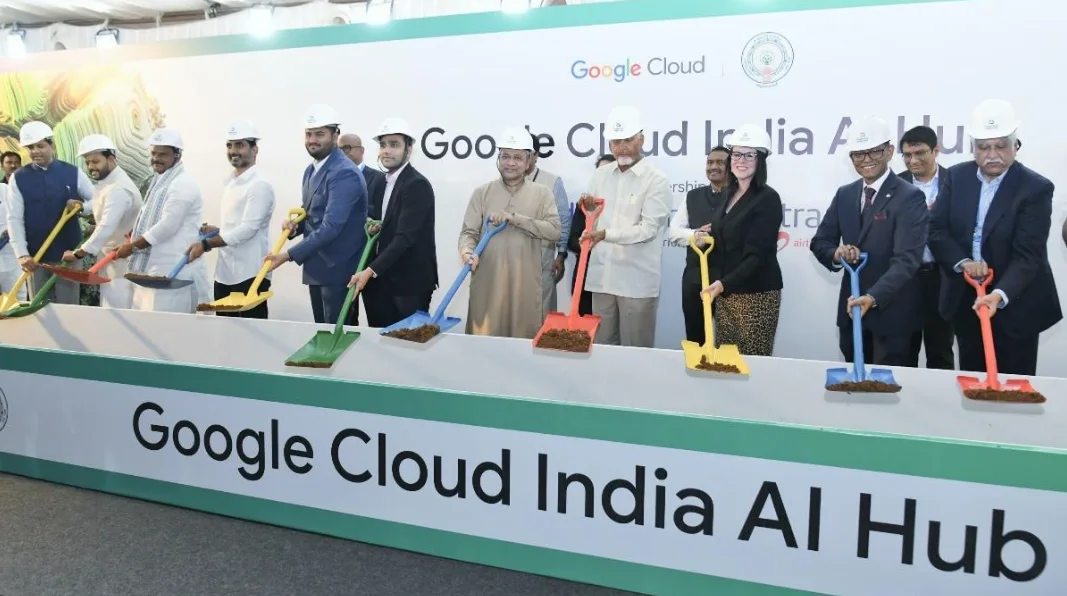
The company is investing approximately $15 billion between 2026 and 2030 in an AI and data-centre hub near Visakhapatnam in Andhra Pradesh. The project is being developed with AdaniConneX and Nxtra by Airtel and represents Google’s largest investment in India.
Construction began in April 2026 at Tarluvada. The development will include a gigawatt-scale data-centre campus, new energy infrastructure, expanded fibre-optic networks and an international subsea-cable gateway connecting India’s eastern coast to Google’s global network.
Supporters expect the project to make Visakhapatnam a major Asian centre for cloud computing and AI development. The facility will support services such as Google Search, YouTube, Workspace and Google Cloud while providing Indian companies with access to advanced computing capacity.
However, environmental organisations and local activists have raised concerns about the enormous quantities of electricity and water required to operate a data centre of this size.
Visakhapatnam reportedly already experiences a water shortage of approximately 70 million litres per day. Critics fear that guaranteeing water to the AI campus could place additional pressure on households, farmers and smaller communities during dry periods.
The project’s proximity to the Kambalakonda Wildlife Sanctuary has created another dispute. The protected area supports animals including leopards, pangolins and several species of birds and reptiles. Campaigners are concerned that construction noise, traffic, artificial lighting and industrial development could disturb surrounding habitats.
A legal challenge has been filed questioning whether the environmental consequences were properly examined before the project received approval. India’s High Court is expected to consider the dispute again on 24 August.
The Andhra Pradesh government has rejected allegations that the development was approved without sufficient examination. Officials maintain that drinking-water sources serving residential and rural communities will not be diverted to the data centre.
Google has also said the project will comply with Indian environmental regulations. The company plans to use advanced air-cooling technology, noise-control systems, clean-energy generation and new electricity-storage infrastructure to reduce its environmental footprint.
Google has partnered with environmental and community organisations to introduce watershed-management projects, drinking-water systems and local training programmes. Initiatives are also planned to assist fishing communities, women-led businesses, students and people seeking work in construction and data-centre operations.
Nevertheless, the disagreement exposes a larger challenge facing the entire technology industry. Artificial intelligence may appear to exist entirely online, but every AI response depends on physical buildings filled with processors that require electricity, cooling and land.
India wants to become a major global AI power, and projects such as Google’s Visakhapatnam hub could provide the infrastructure needed to achieve that ambition. At the same time, development that competes with communities for natural resources could weaken public support for the technology.
The dispute may therefore become an important test for the global data-centre industry. The question is no longer simply whether companies can build enough computing capacity for artificial intelligence, but whether they can do so without placing unacceptable pressure on the people and ecosystems surrounding it.