What happened
Azerbaijan is accelerating an ambitious effort to build a stronger technology industry as the energy-rich country searches for new sources of economic growth beyond oil and gas.
The strategy, highlighted in new reporting on 17 August 2026, involves regulatory reforms, venture-capital development and government efforts to attract international investors into Azerbaijan's emerging technology ecosystem.
One important change came through legislation introduced in July that provides a clearer legal structure for domestic investment transactions.
Previously, Azerbaijani startups and investors could face the inconvenience and expense of structuring some investment deals through foreign jurisdictions.
Creating a stronger domestic framework could make it easier for technology companies to raise money while remaining based in Azerbaijan.
The government is also working on a new investment fund that would combine local and international capital, according to Deputy Digital Development Minister Rashad Hasanov. Officials have studied technology-investment models used in countries including Estonia and Singapore.
Crowdfunding is another part of the transformation.
Azerbaijan's central bank has established a legal foundation for crowdfunding, with detailed regulations expected to follow. The objective is to create additional ways for startups and growing businesses to obtain financing.
Why this matters
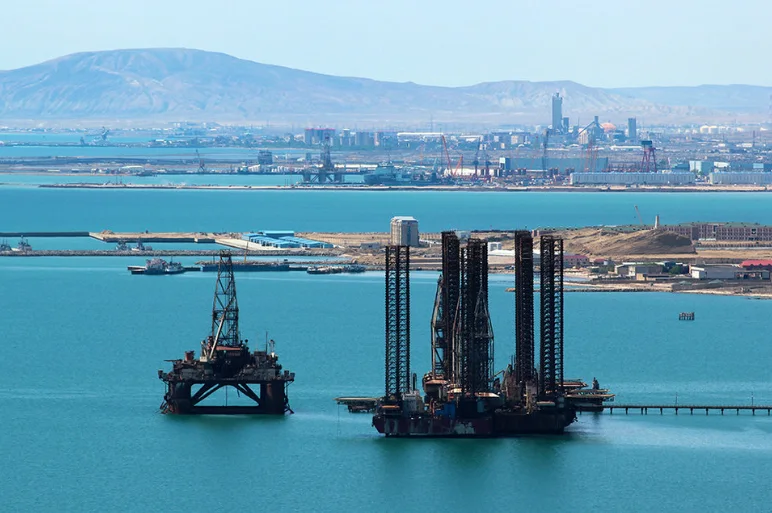
Azerbaijan faces a challenge familiar to many resource-rich economies: how do you build sustainable economic growth when your historical prosperity depends heavily on commodities?
Oil and gas have played an enormous role in the country's economy.
Technology currently contributes only around 2.1% of Azerbaijan's GDP, according to Reuters.
That means the country's technology ambitions are starting from a relatively small base.
But it also demonstrates the size of the potential opportunity.
Software companies, artificial intelligence startups, financial technology businesses and digital services can potentially generate economic activity without requiring the same physical exports as traditional energy industries.
Technology businesses can also sell services internationally while maintaining much of their workforce domestically.
For Azerbaijan, creating successful technology companies could therefore generate new jobs, attract international investment and gradually reduce the economy's dependence on hydrocarbons.
Who is affected
Azerbaijani startups could be among the biggest beneficiaries.
A stronger domestic investment framework may make fundraising easier and reduce the need to establish corporate structures abroad simply to attract investors.
Entrepreneurs and software engineers could also benefit if additional investment produces more technology companies and better-paid digital jobs.
International venture-capital investors are another important group. Regulatory improvements could make Azerbaijan easier to evaluate as an emerging investment destination.
The country's existing venture capital market remains small. Reuters reported that 22 Azerbaijani startups raised about $2.62 million during 2025, while three prominent local venture funds Caucasus Ventures, INMerge Ventures and Tumar Ventures collectively have roughly $11 million in capital.
Those numbers are modest compared with Europe's largest startup ecosystems.
But that is precisely why the government's push could matter: even relatively small increases in international investment could significantly expand Azerbaijan's current venture market.
BoonVerse Analysis
Azerbaijan's biggest technology advantage may not initially be producing another global social network or smartphone manufacturer.
It could be something much more fundamental: energy-powered computing infrastructure.
Artificial intelligence is creating extraordinary demand for data centres and electricity.
Azerbaijan already possesses extensive energy infrastructure while simultaneously expanding renewable generation. That combination could potentially allow the country to convert part of its traditional energy advantage into a digital one.
The country has already been exploring development of data centres and AI infrastructure, including efforts to attract international hyperscale operators. Officials have discussed using future infrastructure not only for Azerbaijan but also to provide digital services to neighbouring markets.
That creates an interesting possibility.
For decades, Azerbaijan exported energy as oil and gas.
In the future, some of that economic value could effectively be exported as computing power, cloud services and AI processing capacity.
But money and electricity alone will not create a successful technology ecosystem.
Trust will be equally important.
International investors need predictable regulation, protection for investments, strong corporate governance and confidence that companies can operate under internationally competitive business rules.
Azerbaijani entrepreneurs themselves acknowledge that building greater trust among foreign investors remains an important challenge.
That may ultimately determine whether Baku becomes a genuine regional technology centre or simply launches another government-backed diversification programme.
What happens next
Several developments are now worth watching.
The first will be the detailed crowdfunding regulations expected from Azerbaijan's central bank. These could determine whether crowdfunding becomes a meaningful financing channel for young technology businesses.
The second is international capital.
Azerbaijan needs considerably more venture investment if it wants to create technology companies capable of competing internationally. The proposed investment fund combining foreign and domestic money could therefore become an important test of investor confidence.
The third is infrastructure.
Azerbaijan is pursuing international hyperscalers and data-centre development while positioning its energy resources as an advantage in the increasingly power-hungry AI economy.
If those pieces come together capital, regulation, talent, computing infrastructure and affordable energy Baku could develop into a technology bridge between Europe and Asia.
The transformation will not happen overnight. An economy built around energy exports for decades cannot become a major technology economy simply through legislation.
But Azerbaijan's direction is becoming clearer: the country that built much of its modern wealth beneath the ground now wants more of its future wealth to come from technology, data and human talent.
Sources
The principal source is Reuters' 17 August 2026 report detailing Azerbaijan's technology diversification drive, July investment reforms, proposed investment fund, venture-capital market and upcoming crowdfunding framework.
Additional context on Azerbaijan's data-centre and hyperscaler strategy comes from statements by the country's Center for Analysis and Coordination of the Fourth Industrial Revolution.