The race to turn self-driving vehicles into a large-scale commercial business has reached another important milestone.
On 15 August 2026, California regulators approved a significant expansion of Waymo's autonomous ride-hailing operations, allowing the company to extend its commercial footprint across substantially more territory in the state.
The approval matters because California is both one of America's largest transportation markets and one of the most important testing grounds for autonomous-driving technology.
Waymo has spent years moving gradually from experimental self-driving vehicles toward a commercial service capable of transporting paying passengers without a human driver behind the wheel.
The latest regulatory decision gives that business considerably more room to grow.
California opens more territory to robotaxis
The approval from the California Public Utilities Commission expands the territory in which Waymo can operate its autonomous passenger service.
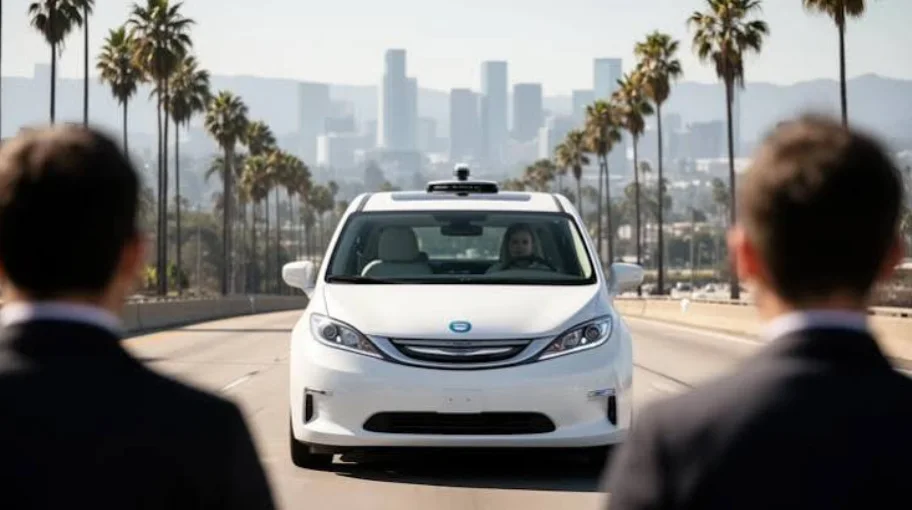
The expansion covers additional areas across the San Francisco Bay Area and the Los Angeles region, substantially increasing the potential market available to the company.
This is important because autonomous ride-hailing businesses depend heavily on scale.
Operating in a limited geographical zone restricts the number of passengers a company can serve and the destinations customers can reach.
A larger service area makes the network more useful.
Someone who previously could use a robotaxi for only part of a journey may eventually be able to travel much farther without switching transportation services.
Waymo is moving beyond experimentation
For years, autonomous vehicles were frequently discussed as technology belonging to the distant future.
That distinction is disappearing.
Waymo already operates commercial autonomous ride-hailing services, meaning passengers can request vehicles that navigate public roads without a conventional human driver controlling them.
The latest expansion demonstrates that the company is increasingly focused on transforming that technology into a large transportation business.
The challenge is no longer simply proving that a car can drive itself.
Companies must demonstrate that autonomous fleets can operate safely, efficiently and economically across increasingly complicated transportation networks.
Alphabet has spent years building the technology
Waymo began as Google's self-driving-car project before becoming a separate business under Alphabet.
Developing autonomous vehicles has required enormous investment in artificial intelligence, sensors, mapping, computing and vehicle systems.
That long development period illustrates why relatively few companies have reached the stage of operating fully autonomous commercial ride-hailing networks.
Vehicles must interpret pedestrians, cyclists, traffic signals, construction zones, emergency vehicles and unpredictable human drivers—all while making decisions quickly enough to operate safely.
Expanding into additional territory increases that complexity.
The decision could intensify competition
Waymo's growth has implications for the broader transportation industry.
Traditional ride-hailing businesses depend heavily on human drivers.
Autonomous fleets introduce a fundamentally different model.
If companies can eventually operate large robotaxi fleets economically, one of the biggest costs associated with ride-hailing—the driver—could change dramatically.
That could influence fares, vehicle utilization and the economics of urban transportation.
However, autonomous fleets also require expensive vehicles, sensors, maintenance infrastructure, remote-support systems and extensive computing resources.
Whether those costs ultimately produce a cheaper transportation model at enormous scale remains one of the industry's biggest business questions.
Safety remains the critical test
Regulatory expansion does not eliminate scrutiny.
Autonomous vehicles operate alongside ordinary drivers, cyclists and pedestrians, meaning crashes or unusual behaviour can quickly become public-safety concerns.
Each expansion therefore increases both Waymo's commercial opportunity and its responsibility.
Regulators will continue examining how autonomous vehicles behave as they encounter increasingly diverse roads, traffic patterns and weather conditions.
Public confidence will be just as important.
Passengers must feel comfortable entering a vehicle with nobody sitting behind the steering wheel.
Why this matters
The 15 August 2026 approval represents more than permission for Waymo vehicles to travel through additional California communities.
It expands the commercial territory available to one of the world's most advanced autonomous-vehicle companies and brings the robotaxi industry closer to answering its most important question:
Can driverless transportation move from impressive technology to a profitable, mainstream global business?
California is becoming one of the largest real-world laboratories for finding that answer.
If Waymo successfully converts its expanded operating territory into growing passenger demand, today's regulatory decision could eventually be remembered as another important step in the transition from human-driven ride-hailing toward autonomous transportation.