One of the largest proposed financial commitments of the artificial-intelligence era is being dramatically reworked.
Nvidia and OpenAI are approaching a revised agreement for a huge data-center development in Ohio, but Nvidia is now expected to provide a financial backstop of less than $120 billion for the project's first phase, rather than the approximately $250 billion previously under discussion.
The reduction is substantial and highlights an increasingly important question surrounding the AI boom: who will carry the financial risk of building the enormous computing infrastructure the industry requires?
A gigantic AI campus in Ohio
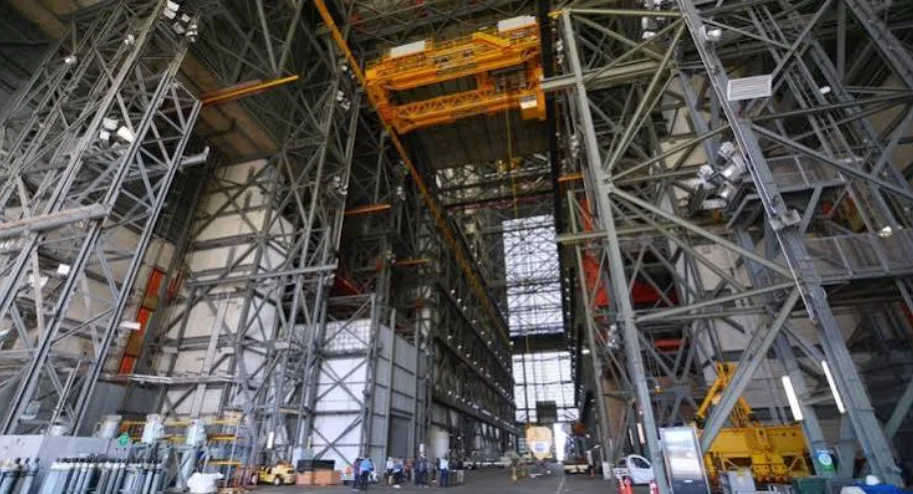
The project is being developed by SB Energy, a subsidiary of SoftBank, and could ultimately provide approximately 10 gigawatts of computing capacity.
OpenAI is discussing leasing the full capacity, while the first phase is expected to involve roughly five gigawatts. If completed at the proposed scale, the development would rank among the largest data-center projects announced anywhere in the world.
Building infrastructure of this magnitude requires extraordinary amounts of capital.
Developers need land, electricity infrastructure, cooling systems, networking equipment, buildings and enormous quantities of advanced AI hardware.
The financial commitments can therefore reach levels previously associated with some of the world's largest infrastructure projects.
Nvidia reduces its exposure
The original structure under consideration could have left Nvidia providing a guarantee approaching $250 billion.
Under the revised proposal, Nvidia's guarantee would apply initially to the first phase and remain below $120 billion.
That remains an extraordinary financial commitment, but reducing it by more than half significantly changes Nvidia's potential exposure.
The revision follows investor concerns about the amount of risk Nvidia could assume while financially supporting companies that are also major buyers of its AI chips.
That relationship creates an unusual business dynamic.
Nvidia benefits when AI companies build more data centers because those facilities require enormous quantities of Nvidia hardware. But helping finance the same infrastructure that creates demand for its products can expose Nvidia to additional financial risk.
Why OpenAI needs enormous computing capacity
Generative AI has created an unprecedented appetite for computing power.
Training advanced models requires huge clusters of specialized processors, while operating products for millions of users creates continuing demand for computing resources.
As AI systems become more sophisticated, infrastructure requirements are increasing.
OpenAI and other frontier AI developers are therefore competing not simply for researchers and customers but also for electricity, chips and data-center capacity.
The Ohio project represents that competition at extraordinary scale.
Wall Street is becoming central to the AI buildout
The revised deal also reflects a broader transformation in how artificial-intelligence infrastructure is being financed.
Earlier this week, Nvidia announced arrangements with major financial institutions aimed at creating financing platforms capable of deploying more than $500 billion toward AI computing infrastructure.
Rather than Nvidia carrying all the financial burden itself, institutional investors and other capital providers could finance more of the equipment and infrastructure required by AI companies.
That could allow the AI industry to continue expanding without placing the entire cost directly onto technology companies' balance sheets.
Another enormous financing arrangement could follow
The Ohio guarantee may not be the only major financial relationship being discussed between Nvidia and OpenAI.
A separate structure is reportedly under consideration that could help finance OpenAI's purchases of Nvidia chips, potentially involving as much as $350 billion.
If such arrangements move forward, they would demonstrate just how capital-intensive the next stage of artificial-intelligence development has become.
The industry is moving from spending billions on individual computing clusters toward discussing infrastructure commitments measured in hundreds of billions of dollars.
Why this matters
Nvidia's decision to reduce its proposed guarantee does not mean the Ohio project has been abandoned. Reports indicate that Nvidia and OpenAI are still working toward an agreement that could be finalized soon.
Instead, the change reveals a growing tension at the heart of the AI investment boom.
Technology companies want enormous amounts of computing capacity, but financing that expansion without creating unacceptable financial risk is becoming increasingly difficult.
Nvidia sits in an unusual position because it can benefit enormously from the construction of new AI data centers while simultaneously being asked to help make those projects financially possible.
Reducing the proposed guarantee from around $250 billion to less than $120 billion initially suggests the company is trying to preserve that opportunity while limiting how much risk ultimately sits on its own balance sheet.
The bigger question for global business is now emerging clearly: the AI revolution may have the technology to keep expanding but can the financial system sustainably fund infrastructure costing hundreds of billions of dollars?