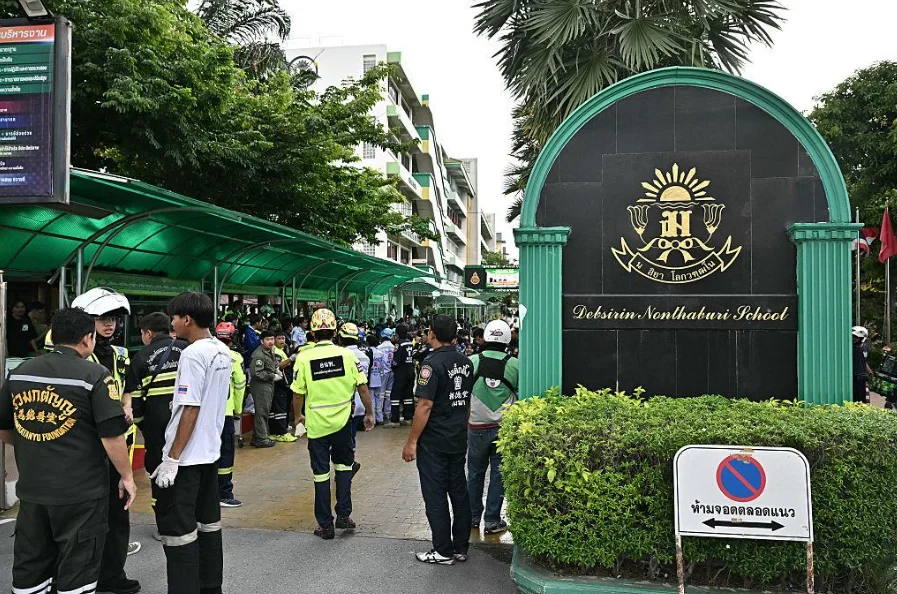
An ordinary Friday morning at Debsirin Nonthaburi School turned into a national tragedy when gunfire erupted across the campus, sending frightened students and teachers running for safety or sheltering inside classrooms.
According to preliminary information from Thai authorities, the 14-year-old student first attacked his grandparents at their home before travelling to the secondary school in Nonthaburi province, northwest of Bangkok. Investigators believe the handgun used in the violence was legally registered to his grandfather.
Five members of the school’s staff were killed during the campus attack. The deaths of the teenager’s grandparents brought the number of victims to seven, while the suspected attacker also died after reportedly shooting himself. At least 23 people were injured, with several initially described as being in critical condition.
Emergency teams transported casualties to nearby hospitals as police secured the school and searched the surrounding area. Investigators recovered unused ammunition, suggesting the situation could have resulted in an even greater loss of life.
The exact motive remains under investigation. Authorities are examining the teenager’s behaviour, access to the firearm and whether warning signs were visible before the attack. Officials have not established a final explanation, making it important to avoid unverified claims about what drove the violence.
Classes at the school have been suspended as families mourn and survivors receive medical and psychological assistance. The tragedy is also expected to create lasting emotional consequences for students who witnessed the attack, even if they escaped without physical injuries.
Prime Minister Anutin Charnvirakul responded by promising new firearm-control legislation. The proposed changes would place tighter restrictions on carrying guns in public, as questions grow over how a child gained access to a legally owned weapon.
The incident has transformed school safety into an urgent national issue. Education authorities now face pressure to review campus access, emergency procedures, student-support systems and cooperation between schools, parents, healthcare workers and law-enforcement agencies.
Beyond Thailand, the tragedy is a painful warning for education systems worldwide: protecting learners requires more than gates and security guards. Safe firearm storage, responsible ownership, early intervention and accessible mental-health support can all form part of preventing violence before it reaches the classroom.