What happened
Pilot Fiber announced on Monday, 17 August 2026, that it has completed its acquisition of the enterprise fiber business previously operated by Extenet Systems.
The acquired assets include infrastructure associated with the former Hudson Fiber Network and Axiom Fiber Network. The transaction became effective on August 15, and the newly acquired network now operates under Pilot's ownership.
The deal significantly expands Pilot's physical fiber footprint beyond New York City and into New Jersey, one of the most important data-center and financial-connectivity markets in the United States.
More than 20 data centers are being added to Pilot's network footprint.
Perhaps most importantly for financial institutions, the expanded network includes direct access to the New York Stock Exchange and Nasdaq.
Approximately 200 additional enterprise, carrier and institutional customers are also moving onto Pilot's network.
Those customers operate across industries including financial services, healthcare, media and higher education. Pilot says their existing services will continue without interruption during the transition.
Why this matters
Fiber-optic infrastructure is becoming increasingly valuable as America's economy becomes more dependent on enormous quantities of data.
Cloud computing, artificial intelligence, financial trading, streaming services and enterprise applications all depend on reliable high-speed networks connecting businesses to data centers and cloud platforms.
For financial institutions, speed can become especially important.
Trading companies move huge volumes of information between offices, data centers and financial exchanges. Even small network delays can matter in markets where automated systems execute transactions extremely quickly.
That makes direct connectivity to the NYSE and Nasdaq strategically valuable.
The acquisition also arrives during an extraordinary infrastructure expansion driven partly by artificial intelligence.
AI data centers need processors and electricity, but they also need enormous network capacity to move information between facilities, businesses and users.
The companies supplying that connectivity form another important layer of America's expanding digital economy.
Who is affected
The roughly 200 customers joining Pilot's network are the most immediately affected. They include enterprises and institutions across finance, healthcare, media and education.
Financial-services companies could particularly benefit from Pilot's expanded New Jersey footprint and direct connections to major U.S. exchanges.
Data-center operators are another important group. Connecting more than 20 additional facilities expands the number of locations where Pilot can potentially sell high-capacity connectivity.
Existing Pilot customers could also benefit because the acquisition creates additional destinations accessible through the company's owned network.
Pilot already operates more than 300 miles of fiber infrastructure, serving over 3,700 businesses across more than 1,000 buildings.
The acquisition therefore expands an existing metropolitan network rather than creating one from scratch.
BoonVerse Analysis
The most interesting part of this deal is what customers normally cannot see.
People experience the internet through websites, apps, cloud platforms and AI services.
Behind those products sits an enormous physical system of fiber-optic cables, data centers, routers, electricity infrastructure and network interconnections.
Pilot is strengthening its position in that hidden layer.
And location matters enormously.
New Jersey has become an important part of the infrastructure supporting America's financial markets and digital economy. Connecting more data centers across the New York-New Jersey corridor allows Pilot to offer businesses additional routes between offices, computing infrastructure, cloud services and financial exchanges.
There is another reason fiber assets could become increasingly valuable: AI is generating extraordinary data traffic.
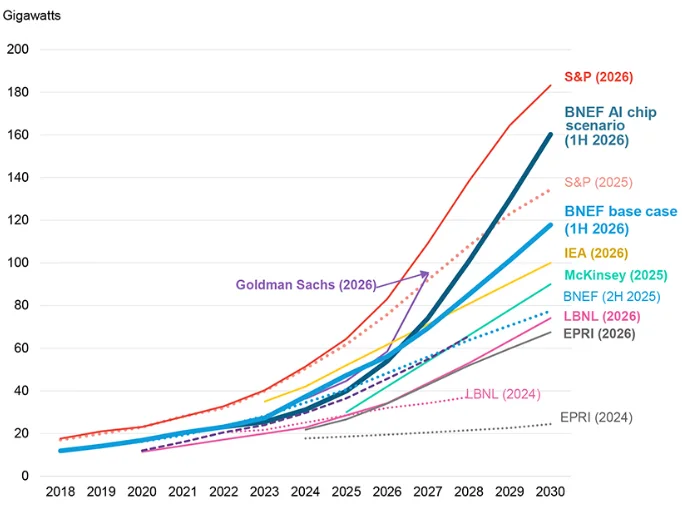
The current AI infrastructure boom is often measured by how many GPUs companies purchase or how many gigawatts their data centers require.
But processors cannot operate in isolation.
A massive AI facility must constantly exchange information with other data centers, cloud services, businesses and millions of users.
That requires connectivity.
The companies owning strategic fiber routes could therefore become indirect beneficiaries of America's AI investment boom.
Pilot's acquisition also illustrates an important business advantage: owning infrastructure.
Rather than relying entirely on other network operators, Pilot says it owns and operates its network infrastructure and handles operations internally.
That can give a connectivity provider greater control over performance, maintenance and future expansion.
What happens next
Now that the acquisition is complete, Pilot says its focus is shifting toward investment and execution.
The company plans to invest in the newly acquired infrastructure and expand its New Jersey presence while integrating Extenet's enterprise customers.
Customer retention will be an important early test.
Moving approximately 200 business and institutional customers onto a new owner's network requires maintaining reliability while integrating operations behind the scenes.
Expansion is the next opportunity.
With more than 20 additional data centers connected to its footprint, Pilot can potentially sell additional services including dedicated internet access, Ethernet transport, dark fiber, wavelength connectivity and IP transit.
The larger question is whether the company continues acquiring or constructing fiber beyond the New York-New Jersey region.
America is pouring enormous amounts of capital into AI, cloud computing and data centers. As those facilities multiply, demand for the infrastructure connecting them could rise alongside demand for computing power itself.
That means some of the biggest business opportunities created by AI may not belong exclusively to companies building intelligent models.
They may also belong to companies owning the physical cables carrying those models' data from one machine to another.
Sources
The principal source is today's 17 August 2026 acquisition-completion announcement, confirming the effective date, acquired network, expansion into New Jersey, more than 20 additional data centers, direct NYSE and Nasdaq connectivity and approximately 200 transitioning customers.