Nvidia's extraordinary rise in artificial intelligence is increasingly giving the company another kind of power: the financial muscle to make enormous strategic investments across the technology industry.
In a major disclosure reported on 15 August 2026, Nvidia revealed that it holds a stake valued at nearly $21 billion in Elon Musk's SpaceX, alongside approximately $30 billion in Intel shares.
Together, the two positions represent more than $50 billion invested across companies operating in two of the world's most strategically important industries—semiconductors and space technology.
The scale makes the disclosure significant well beyond Nvidia itself.
Nearly $21 billion tied to SpaceX
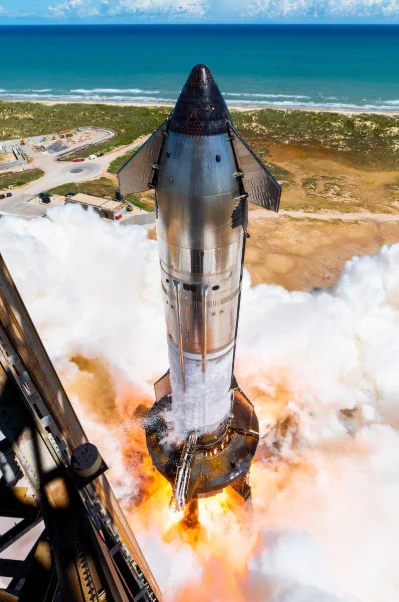
SpaceX has developed from a private rocket company into one of the world's most important space businesses.
Its operations now span rocket launches, spacecraft and the enormous Starlink satellite-internet network.
For Nvidia, exposure to SpaceX provides a position in an industry increasingly dependent on advanced computing, communications infrastructure and artificial intelligence.
The disclosed stake, valued at nearly $21 billion, also illustrates the enormous valuation SpaceX has reached while remaining privately held.
Nvidia is therefore gaining financial exposure to a company operating far beyond its traditional semiconductor market.
Intel position is even larger
Nvidia's approximately $30 billion position in Intel is potentially even more consequential.
The two companies have historically occupied very different positions within the semiconductor industry.
Intel became one of the defining companies of the personal-computer era through its dominance in central processing units, while Nvidia's graphics processors eventually became essential infrastructure for the modern AI boom.
The balance of power has changed dramatically.
Nvidia is now one of the world's most valuable technology companies, while Intel has been spending heavily to rebuild its manufacturing competitiveness.
The newly disclosed scale of Nvidia's Intel investment shows just how much the semiconductor landscape has evolved.
Intel is spending heavily on its comeback
Intel itself is in the middle of an enormous capital-raising and investment programme.
Earlier this week, the company raised $20 billion through an expanded share offering, increasing the size of a transaction that had initially targeted $15 billion. The money is intended to support Intel's capital-intensive manufacturing expansion and other corporate needs.
Intel is attempting to strengthen its contract chip-manufacturing business while investing in advanced fabrication and packaging technologies.
AI demand is one of the major forces behind that spending.
The industry needs increasingly large quantities of advanced chips and enormous computing infrastructure, creating opportunities for manufacturers capable of producing leading semiconductor technologies at scale.
Nvidia is becoming more than a chip supplier
For years, Nvidia was primarily understood as a company selling graphics processors.
Artificial intelligence has fundamentally changed that identity.
Its GPUs became critical infrastructure for training and operating generative-AI models, creating enormous demand from technology companies building data centres around the world.
The resulting financial strength gives Nvidia opportunities to deploy capital far beyond its own research and manufacturing operations.
Large investments can give the company exposure to industries that may become major users of AI computing in the future.
Space technology is one example.
Semiconductor manufacturing is another.
More than $50 billion sends a powerful signal
The combined scale of the SpaceX and Intel positions is what makes today's disclosure particularly striking.
More than $50 billion is an amount larger than the entire market value of many multinational corporations.
Deploying capital on that scale demonstrates how rapidly the AI boom has transformed Nvidia's position within global business.
It also shows how increasingly interconnected the world's biggest technology companies are becoming.
Chip designers, semiconductor manufacturers, cloud companies, AI developers, data-centre operators and satellite businesses may compete in some areas while simultaneously investing in, supplying and partnering with one another.
Why this matters
Nvidia's rise has already reshaped the semiconductor market.
The latest disclosure suggests its influence is spreading further.
A nearly $21 billion position in SpaceX gives Nvidia exposure to one of the world's most ambitious private technology companies, while its roughly $30 billion Intel stake connects it financially to one of the biggest semiconductor turnaround efforts underway.
The significance is therefore not simply that Nvidia owns valuable shares.
It is where the money is going.
AI infrastructure, advanced semiconductor manufacturing and space-based technology are emerging as three of the largest investment frontiers of the coming decade. Nvidia now has enormous financial interests spanning all three.
That makes the 15 August 2026 disclosure another indication that the AI boom is no longer transforming only software and computing it is beginning to reshape how the world's largest technology companies deploy tens of billions of dollars in capital.