What happened
Chicago-based Madison Air Solutions announced today that it has entered into a definitive agreement to acquire ebm-papst, a German company specializing in high-performance airflow technology.
The transaction carries an enterprise purchase price of approximately $5.4 billion, falling to an effective $5.0 billion after taking anticipated future tax savings into account. Madison Air confirmed the announcement in a Form 8-K filing with the U.S. Securities and Exchange Commission on 17 August.
Founded in 1963 and headquartered in Mulfingen, Germany, ebm-papst has developed into a major international supplier of fans, motors and advanced airflow systems.
Its Air Technology business has more than 250 million fans installed worldwide, operates across roughly 40 countries and holds more than 1,200 patents. The company expects approximately $2.8 billion in revenue and $343 million in adjusted EBITDA in 2026.
Madison Air sees an opportunity to combine that engineering expertise with its own portfolio of air-quality businesses.
The acquisition is expected to nearly double Madison Air's addressable market, adding approximately $30 billion in potential market opportunity.
Why this matters
This is more than an acquisition involving fans and ventilation equipment.
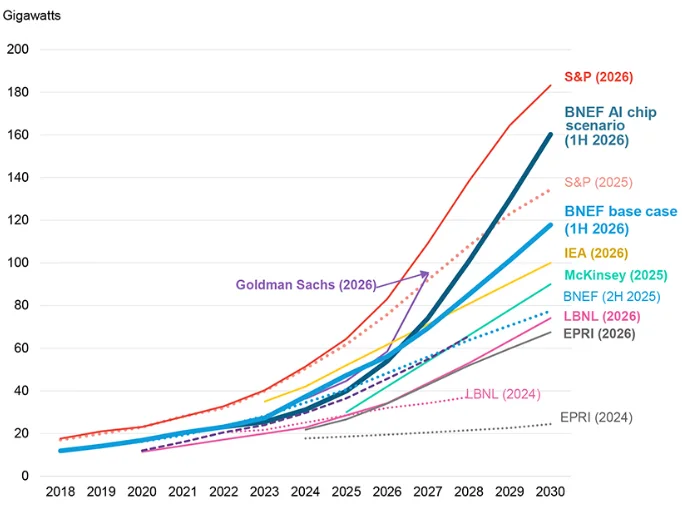
Cooling is rapidly becoming strategically important because some of the world's fastest-growing industries generate enormous amounts of heat.
Artificial-intelligence data centres are a prime example.
Thousands of high-performance processors operating continuously require enormous amounts of electricity—and much of that electrical energy eventually becomes heat.
Keeping those systems within safe operating temperatures requires sophisticated cooling infrastructure.
That means the global AI infrastructure boom is generating opportunities not only for semiconductor companies and data-centre operators but also for businesses supplying fans, cooling systems, motors, power equipment and other supporting technologies.
ebm-papst's equipment serves applications including data centres, HVAC and refrigeration systems, industrial processes and other mission-critical environments.
Madison Air is therefore acquiring a company positioned inside several long-term trends at once: data-centre expansion, energy efficiency, electrification and smarter buildings.
Who is affected
Madison Air shareholders face perhaps the most immediate impact.
The company expects the transaction to increase adjusted earnings per share during the first full year following completion. It is targeting approximately $160 million in annual cost synergies by the end of the third year.
However, financing a transaction this large introduces additional risk.
Madison Air intends to fund the purchase through a combination of cash, debt and equity financing. UniCredit and Wells Fargo have provided fully underwritten commitments for the debt component.
The company expects net leverage below 4 times at closing and wants to reduce that figure toward approximately 2.5 times within two years.
ebm-papst employees and customers will also be affected as the German manufacturer becomes part of a much larger U.S.-controlled air-quality group.
Meanwhile, data-centre operators, manufacturers and building developers could eventually benefit from a broader portfolio combining Madison Air's application expertise with ebm-papst's airflow technology.
BoonVerse Analysis
The most interesting part of this acquisition may be what it tells us about the businesses quietly benefiting from the AI revolution.
When people think about artificial intelligence, the obvious winners are companies producing models, cloud computing and advanced processors.
But every giant AI data centre requires an enormous physical ecosystem.
It needs electricity.
It needs transformers and backup power.
It needs networking equipment.
And critically, it needs to remove enormous quantities of heat.
That creates a secondary AI economy involving companies that may rarely appear in consumer technology headlines.
Madison Air's acquisition arrives directly within that transformation.
There is also a strategic logic to vertical integration.
Madison Air already uses airflow technology within its products. Owning a major producer of advanced fans and motors gives the company greater control over an important component of the systems it sells.
The company also gains more than 1,200 patents and a substantial international presence, particularly across Europe and Asia.
But the deal isn't without risk.
Madison Air is paying billions of dollars and taking on substantial financing obligations. Management must successfully integrate a large German engineering company operating across dozens of countries while achieving its promised cost savings.
Investors immediately showed some caution: Madison Air shares fell roughly 4% in Monday trading following the announcement.
That reaction highlights the central question.
Madison Air is betting that the long-term growth of cooling, electrification, smart buildings and data centres will justify the enormous acquisition price.
What happens next
The transaction is expected to close around the end of 2026, but it must first receive required regulatory approvals and satisfy other customary closing conditions.
Regulatory clearance will therefore be the first major milestone.
After completion, attention will shift toward integration.
Madison Air expects to generate around $40 million in cost synergies during the first year, eventually reaching approximately $160 million annually by the third year.
Investors will closely watch whether those savings materialize and whether Madison Air can reduce the debt accumulated through the acquisition as quickly as planned.
Another important indicator will be data-centre demand.
If AI infrastructure continues expanding at its current extraordinary pace, advanced cooling and airflow could become increasingly valuable parts of the technology supply chain.
That could make today's acquisition look less like a traditional industrial takeover and more like a strategic wager on the physical infrastructure behind the AI economy.
The AI boom may be powered by chips—but those chips cannot keep running without something capable of keeping them cool.
Sources
The strongest source is the U.S. Securities and Exchange Commission filing dated 17 August 2026, which confirms Madison Air's announcement and the acquisition agreement.