Kenya is giving its youngest scientists a bigger national stage.
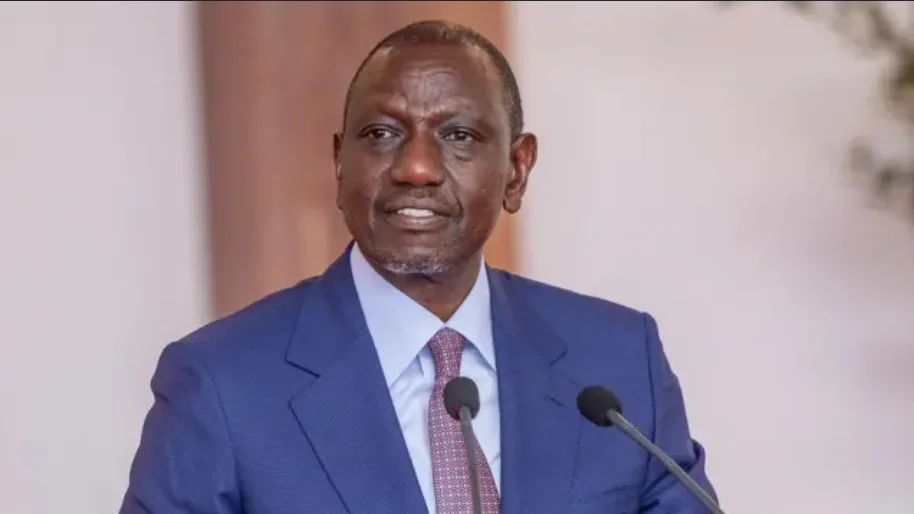
President William Ruto announced on Friday, 14 August 2026, that winners of the country's annual Science and Engineering Fair will begin receiving official recognition at State House from next year.
The President issued the directive while attending the State Concert for the 98th Kenya Music Festival at Bungoma State Lodge.
Under the new arrangement, the Ministry of Education will bring winners of the Kenya Science and Engineering Fair to a dedicated national event where their inventions, experiments and technological ideas can be presented.
For decades, Kenya has celebrated students excelling in music, drama and other creative disciplines through major national events. Ruto said scientific achievement should receive comparable recognition.
The Kenya Science and Engineering Fair has a particularly long history. According to the President, school science and innovation competitions have been held in the country since 1962, yet their winners have not traditionally received the same State House platform available to some other student competitions.
That is now set to change.
From school projects to national solutions
The importance of the new initiative could extend beyond rewarding students with certificates or ceremonies.
Science fairs give young people an opportunity to identify problems, develop ideas and build practical solutions. But promising school projects can easily disappear once competitions end if students lack mentorship, financing or connections to institutions capable of developing their ideas further.
Giving winning projects greater national visibility could help connect young innovators with universities, businesses, researchers and government institutions.
Ruto said he wants to personally meet the young scientists, examine what they have developed and hear the thinking behind their projects.
That approach could help change how school innovation is viewed.
Instead of treating a science fair merely as an extracurricular competition, successful projects could increasingly be considered early-stage ideas with potential applications beyond the classroom.
STEM education gets a higher profile
The announcement also sends a wider message about the role of science, technology, engineering and mathematics — STEM — in Kenya's education system.
Countries around the world are competing to develop skilled workers in artificial intelligence, engineering, biotechnology, renewable energy, computing and other technology-intensive industries.
Building those capabilities does not begin at university.
Interest in science and engineering often develops much earlier, when students are given opportunities to experiment, solve problems and create things themselves.
National recognition can provide another incentive for students to pursue those subjects seriously.
Ruto said young scientists and innovators make an important contribution to Kenya's future and should know that their country values their work.
A wider talent strategy is emerging
The science directive formed part of a broader set of announcements made during Friday's event.
Ruto also announced plans for a Kenya National Talent Search, intended to identify and develop young talent across areas including music, comedy, acting, poetry, film, dance and sport.
He directed Deputy President Kithure Kindiki to coordinate establishment of the programme, while the State Department for Youth was instructed to begin implementation in cooperation with the government's Creative Economy Office.
The combination of the two initiatives suggests Kenya is attempting to create stronger national pathways for identifying exceptional ability whether it appears in a laboratory, on a stage or on a sports field.
Why this matters
The most important question will be what happens after talented students are identified.
Recognition can motivate young innovators, but turning promising school projects into meaningful technologies requires much more.
Students may need mentorship, laboratories, university partnerships, intellectual-property support, investment and opportunities to continue developing their inventions.
If the new State House programme eventually connects winners with those resources, its impact could extend far beyond an annual ceremony.
Kenya has a rapidly growing technology ecosystem and a large young population. Encouraging scientific thinking at school level could help create the engineers, researchers and entrepreneurs needed to sustain that growth.
The announcement made on 14 August 2026 therefore represents a potentially important change in how Kenya celebrates academic talent.
From 2027, the country's best young scientists will no longer compete only for recognition inside the education system.
Their ideas are set to receive a platform at the highest level of government sending students a powerful message that inventing, experimenting and solving problems can be achievements worthy of national celebration.