SALADO, TEXAS — 12 August 2026
A routine military training flight ended in tragedy on Wednesday afternoon when a US Army Apache helicopter plunged into a field in Central Texas, killing both soldiers aboard and setting the surrounding grassland on fire.
The AH-64 Apache went down at approximately 1:30 p.m. near Salado, a community roughly 50 miles north of Austin and not far from the Fort Hood military installation.
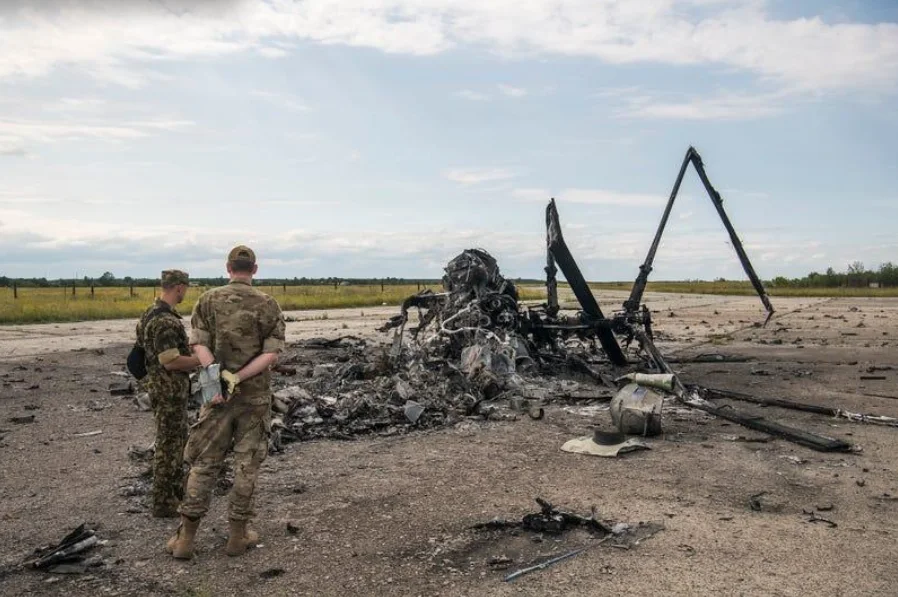
The impact was powerful enough to scatter wreckage across the field and ignite dry vegetation surrounding the crash site. Thick columns of smoke became visible across the area as firefighters, law-enforcement officers and military emergency teams converged on the scene.
Bell County authorities confirmed that neither crew member survived.
Fire spreads beyond the wreckage
The helicopter did not strike a house or other structure. However, flames spreading through the surrounding field created an additional emergency for nearby residents.
Several homes were evacuated while firefighting teams worked to prevent the blaze from reaching populated areas. Aircraft were deployed to drop fire retardant over the burning field, while ground crews attempted to contain the flames and protect the crash site.
A nearby road became temporarily impassable as emergency vehicles moved into position and officials restricted access to the area. Residents and motorists were advised to stay away while the response continued.
The fire complicated the recovery operation because investigators could not immediately approach every section of the wreckage. Securing the scene required teams to manage burning vegetation, potentially hazardous aircraft components and military equipment scattered by the impact.
Routine mission turns fatal
A military official said the Apache had been conducting a routine training flight when it crashed. Authorities have not disclosed how long the aircraft had been airborne, the altitude from which it fell or whether the crew reported an emergency before impact.
No preliminary cause has been announced.
Investigators are expected to examine the helicopter’s maintenance records, flight-control systems, engine performance, weather conditions and communications with Fort Hood before the crash.
The Army may also recover onboard flight information and examine the wreckage for evidence of mechanical failure. Such investigations can take months, particularly when fire damages critical aircraft components.
Fort Hood’s criminal investigation division was reported to be leading the initial inquiry, supported by military aviation specialists and local authorities.
Families awaiting answers
The names and ranks of the two soldiers had not been released at the time of publication. The Army generally withholds such information until relatives have been formally notified.
Brigadier General Ethan Diven, Fort Hood’s acting commanding general, said the immediate priorities were securing the site, assisting the emergency response and supporting the crew members’ families.
For the Fort Hood community, the crash brings another painful reminder of the dangers military personnel face even when they are not deployed to a combat zone. Training missions require aircrews to practise complex manoeuvres, emergency responses and battlefield operations under realistic conditions.
The AH-64 Apache has served as one of the US Army’s principal attack helicopters since the 1980s. It normally carries two people seated in tandem: a pilot in the rear cockpit and a co-pilot gunner in the front.
The aircraft is designed for demanding battlefield missions, but its crews spend extensive hours training domestically to maintain operational readiness.
A tragedy still developing
Authorities have not indicated that any civilians were injured, and officials said the helicopter avoided nearby buildings when it came down. Nevertheless, the crash produced two emergencies at once: the loss of the aircraft and crew, followed immediately by a wildfire threatening surrounding homes.
As night approached, attention shifted from containing the flames to preserving evidence that could explain why an advanced military helicopter failed during an ordinary training operation.
The field near Salado is now both an investigation site and a place of loss. For two military families, the answers that eventually emerge will not change Wednesday’s outcome but they may determine whether another crew can be protected from a similar tragedy.
The crash and fatalities were confirmed by The Associated Press, with local developments reported by KWTX. This remains a developing story, and casualty identification and investigative findings may be updated.