What happened
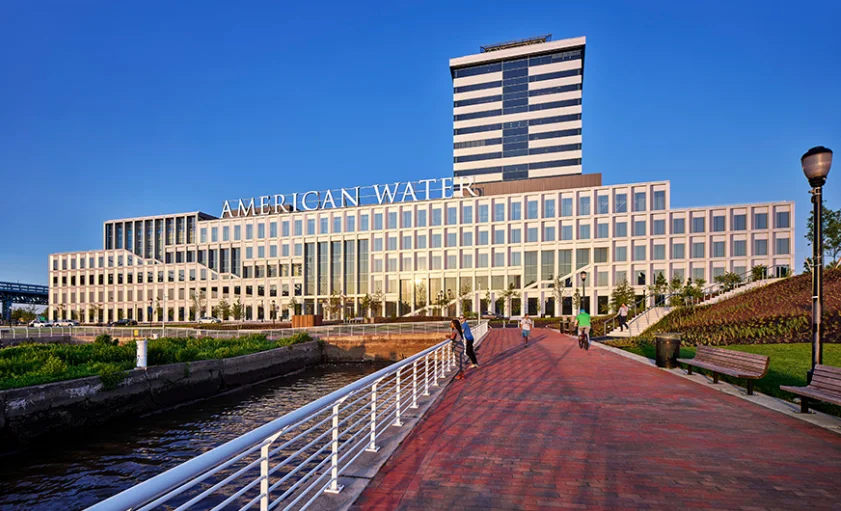
American Water and Essential Utilities announced on Monday, 17 August 2026, that the waiting period required under the U.S. Hart-Scott-Rodino Antitrust Improvements Act has expired for their proposed merger.
That may sound like a procedural development, but it represents an important step toward completing a major consolidation in America's utility industry.
The Hart-Scott-Rodino process requires companies involved in certain large transactions to notify federal antitrust authorities and wait before completing the deal. The waiting period gives regulators an opportunity to examine whether a transaction could substantially reduce competition.
Its expiration removes one significant federal regulatory obstacle, although the merger still requires other approvals before it can close.
The companies originally announced their agreement in October 2025. Under the all-stock transaction, American Water shareholders are expected to own approximately 69% of the combined company, while Essential shareholders would hold roughly 31%.
The proposed combination was valued at about $40 billion when announced, making it one of the largest utility combinations in recent U.S. history.
Why this matters
Water infrastructure rarely attracts the attention given to artificial intelligence, banking or automobiles, but it is one of America's most essential industries.
Communities depend on enormous networks of pipes, treatment facilities, pumping stations and wastewater infrastructure every day.
Much of that infrastructure requires continuing modernization.
Combining two large utilities potentially gives the merged business greater financial capacity to invest in replacing ageing infrastructure, improving treatment systems and expanding services.
But consolidation also raises an important regulatory question.
Water is not an ordinary consumer product where dissatisfied customers can simply switch providers. In many communities, residents receive water from a single regulated utility.
That makes oversight of prices, service quality and infrastructure investment particularly important when large utility companies combine.
Who is affected
The most important group is water and wastewater customers.
American Water says it provides water and wastewater services to approximately 14 million people across 14 states and 18 military installations.
Essential Utilities operates regulated water, wastewater and natural-gas businesses, giving the combined organization an unusually broad infrastructure footprint.
Shareholders of both companies are also directly affected because this is an all-stock transaction rather than a conventional cash takeover.
Employees will be watching the integration closely as well.
Large corporate combinations can create opportunities through expansion, but they can also produce overlapping administrative functions and organizational restructuring.
State regulators represent another crucial group because utility commissions have responsibilities involving customer rates, service standards and infrastructure investment.
BoonVerse Analysis
The most interesting aspect of this deal is not simply its enormous valuation.
It is what the merger says about the changing economics of America's basic infrastructure.
Water networks are extremely capital-intensive.
Replacing underground pipes, upgrading treatment facilities and improving resilience can require billions of dollars over many years.
Scale therefore matters.
A larger utility can potentially spread technology, engineering expertise and financing capabilities across a much broader customer base.
But bigger does not automatically mean better.
The real measure of success will be whether consolidation produces measurable improvements for customers rather than merely creating a larger corporation.
That means three numbers will eventually matter more than the headline merger valuation:
How much infrastructure investment increases.
How reliable water services become.
What customers ultimately pay.
There is also a broader investment story.
AI data centres, semiconductor factories and advanced manufacturing projects receive enormous attention, but every major industrial expansion ultimately depends on traditional infrastructure—electricity, water, wastewater systems, roads and communications.
America's current investment boom could therefore increase pressure on utilities to modernize faster.
A larger American Water could be positioned to participate in that infrastructure cycle.
At the same time, regulators will have to ensure that customers receive a fair share of any efficiencies created through greater scale.
What happens next
Today's announcement does not mean the merger is complete.
Expiration of the federal antitrust waiting period clears one important hurdle, but the transaction remains subject to additional regulatory approvals and customary closing conditions.
State utility regulators will be especially important because water and other regulated utility operations are closely supervised at state level.
Investors should therefore watch for further regulatory decisions and progress toward shareholder and other required approvals.
If all necessary conditions are satisfied, the combination would create a substantially larger American infrastructure company with operations reaching millions of households and businesses.
The most important question will come after the corporate paperwork is finished:
Can creating a much larger water utility translate into better infrastructure and reliable service without placing unnecessary costs on customers?
That will determine whether this mega-merger ultimately becomes an infrastructure success story—or simply a bigger name on America's utility bills.
Sources
The primary source is the companies' 17 August 2026 announcement, confirming expiration of the Hart-Scott-Rodino waiting period and providing information about the proposed combination.
The transaction's regulatory disclosure is also supported by material filed with the U.S. Securities and Exchange Commission today.