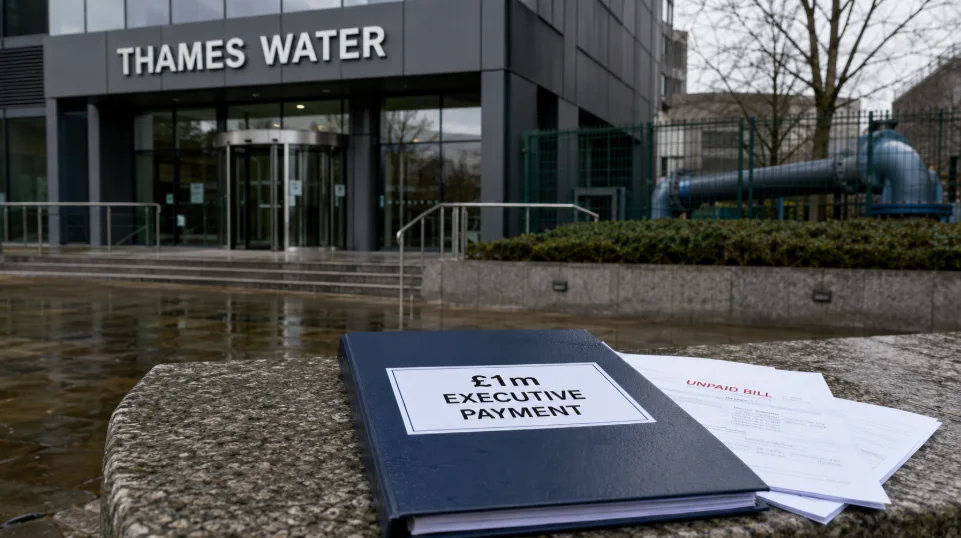
Thames Water is facing another wave of public and political anger after details emerged of a £1 million payment made to chief financial officer Steve Buck while the utility remains dangerously close to financial failure.
Buck joined the company in April 2025 after holding senior positions at other British water and energy businesses. The payment formed part of the package offered to recruit him and was reportedly completed in July 2026.
The timing has proved particularly controversial. Thames Water is burdened by approximately £20 billion in debt and has depended on expensive emergency financing from creditors to continue operating while negotiations over a long-term rescue remain unresolved.
Britain’s Department for Environment, Food and Rural Affairs criticised the payment as unacceptable. The reaction reflects concern that executive-compensation arrangements may be undermining rules designed to prevent poorly performing water companies from rewarding senior managers. Report published on 10 August
Thames Water provides water and wastewater services to about 16 million customers across London and south-east England. Its financial condition is therefore not an ordinary corporate matter: a disorderly collapse could force the government to place the company into a special-administration process to maintain essential services.
The business has accumulated enormous debt while facing criticism over leaks, customer service, sewage discharges and inadequate investment in ageing infrastructure. Regulatory penalties have added further pressure to a balance sheet already weakened by high borrowing costs.
Creditors supplied approximately £3 billion in emergency financing to prevent an immediate collapse. Critics argue that money intended to stabilise an essential utility should not support unusually generous executive packages.
Thames Water’s leadership maintains that competitive remuneration is necessary to recruit and retain experienced executives during an extraordinarily complicated restructuring. Chairman Sir Adrian Montague has defended such arrangements as essential to maintaining a management team capable of delivering the company’s proposed turnaround.
That explanation has not silenced opponents. Politicians and environmental campaigners contend that senior managers should not receive substantial additional payments while customers face rising bills and the utility continues to miss environmental and operational targets.
The controversy also exposes a possible weakness in executive-pay restrictions. Regulations can prevent certain performance bonuses at failing water companies, but joining payments, salary increases and retention arrangements may be classified differently. Regulators are consequently examining whether companies are following the purpose of the rules rather than merely their technical wording.
Thames Water has also disclosed millions of pounds in payments to other senior personnel. The repeated controversies have intensified calls for stronger oversight and, from some campaigners, temporary public ownership.
Why This Matters
The dispute raises a broader corporate-governance question: how should an essential but failing company compensate the executives hired to rescue it?
Thames Water argues that restructuring a heavily indebted utility requires specialised leadership. Critics respond that exceptional rewards cannot be justified when customers, taxpayers and the environment bear the consequences of corporate failure.
Creditors are still attempting to negotiate a restructuring involving new investment, debt reductions and regulatory concessions. If those negotiations fail, special administration could become unavoidable.
Whatever happens next, the £1 million payment has further weakened confidence in a company already fighting for financial survival and public legitimacy.