The artificial-intelligence boom may be about to receive a financial structure almost as ambitious as the technology itself.
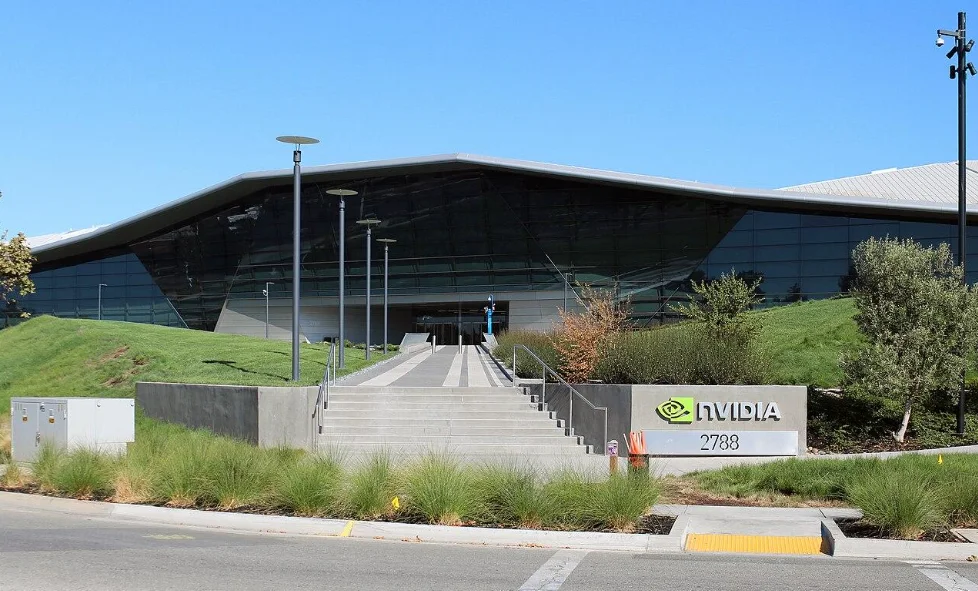
Nvidia is reportedly discussing a potential $500 billion infrastructure-financing partnership with a group of powerful global investors. The participating institutions are said to include Apollo Global Management, Blackstone, BlackRock’s Global Infrastructure Partners, Brookfield Asset Management, Goldman Sachs and KKR. Developing business report
Rather than financing one company or a single data centre, the proposed platform could support an entire network of projects. These could include semiconductor purchases, server installations, data-centre construction, cooling systems and new electricity generation.
The size of the proposal reflects a difficult reality confronting the AI industry: producing advanced chips is only one part of the challenge. Companies must also find suitable land, secure reliable electricity, construct enormous facilities and connect thousands of processors through high-speed networks.
Nvidia would bring its dominant position in AI computing hardware, while the investment firms could provide infrastructure expertise, debt financing and long-term capital. This combination could help technology companies build facilities without carrying every construction expense directly on their balance sheets.
Combined AI-related spending by major technology companies is expected to exceed $730 billion during 2026. Nvidia also entered the bond market in June with a $25 billion debt offering, demonstrating how even the strongest beneficiaries of the AI boom are seeking additional financial flexibility.
However, the reported $500 billion figure should not be interpreted as money already committed. Discussions remain at an early stage, and the final platform could be smaller, divided among multiple projects or assembled gradually over several years. Nvidia and most of the financial groups involved had not publicly confirmed detailed terms when the development emerged.
Investors responded cautiously, with Nvidia shares falling more than 3% during afternoon trading. The decline may reflect concerns about the extraordinary cost of maintaining AI growth and the financial risks attached to infrastructure projects built around rapidly changing technology.
If completed, the partnership could change how the next generation of data centres is financed. Instead of technology companies funding projects alone, banks, private-equity groups and infrastructure investors would share the risk—and potentially the future returns.
The proposal also shows that the AI race is moving beyond software and semiconductors. Electricity, construction, cooling and access to capital are becoming just as important as computing performance.
For now, the $500 billion plan remains a developing business story rather than a completed transaction. Its extraordinary scale nevertheless makes it one of the most closely watched global corporate developments to emerge on 10 August 2026.