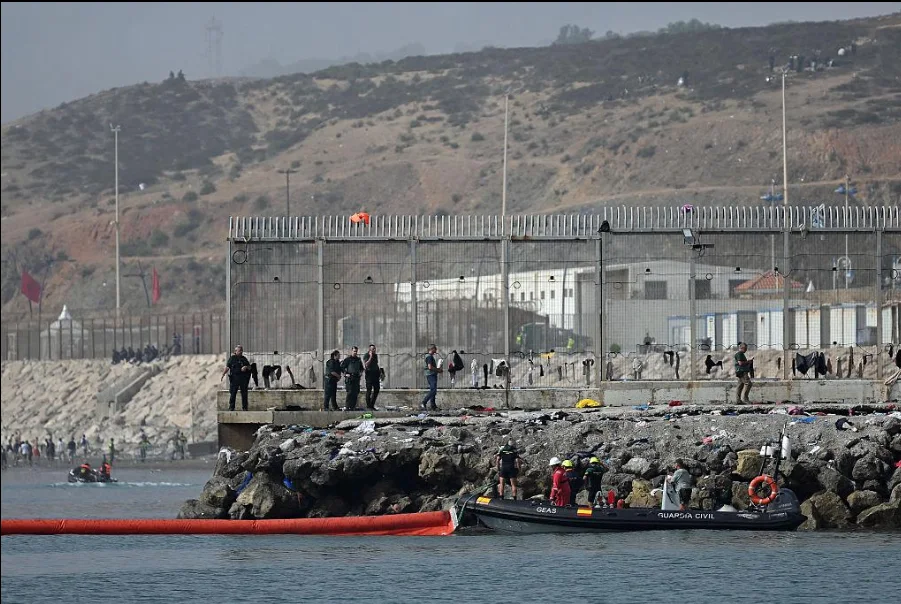
The Spanish government has started installing a floating maritime barrier around parts of the Ceuta coastline after thousands of migrants attempted to enter the Spanish enclave from North Africa in one of the largest crossings in recent years. The move follows a tragic incident in which dozens of people lost their lives during the mass migration attempt.
Spanish officials said the floating barrier is designed to improve surveillance and discourage dangerous sea crossings while allowing emergency services to respond quickly to people in distress. Additional police, border guards, and humanitarian workers remain deployed in Ceuta as authorities continue managing the aftermath of the crisis.
The development has intensified political debate across the European Union over migration management, border security, and humanitarian responsibilities. Several European governments have called for stronger cooperation with North African countries while emphasizing the need to protect human life and combat migrant smuggling networks.
The Ceuta crisis remains one of the world's most closely watched international developments. European leaders are expected to continue discussing migration policy in the coming days as Spain balances border enforcement with humanitarian obligations under international law.