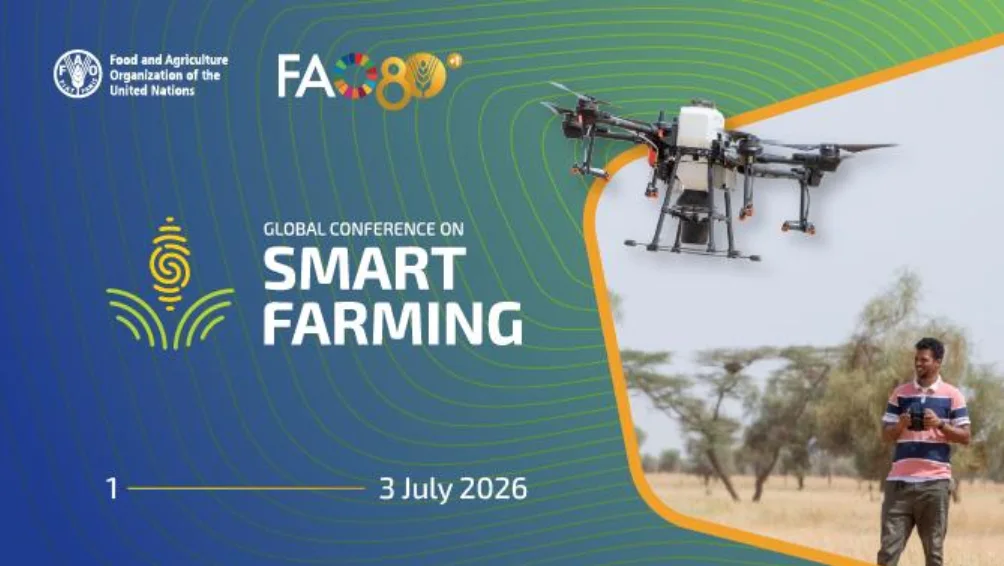
The FAO Global Conference on Smart Farming, held at FAO headquarters in Rome, brought together ministers, agricultural experts, innovators, and farming organizations from around the world to explore how digital technologies can transform agriculture. The conference focused on using artificial intelligence, satellite data, precision agriculture, robotics, and Internet of Things (IoT) technologies to help farmers increase productivity while using fewer natural resources.
FAO emphasized that smart farming is becoming essential as agriculture faces increasing pressure from climate change, water scarcity, labor shortages, and a growing global population. Delegates discussed practical solutions that can improve crop monitoring, optimize irrigation, detect pests and diseases earlier, and provide farmers with real-time decision-making tools.
The conference also highlighted the importance of ensuring that small-scale farmers, women, and young entrepreneurs can access digital technologies. Participants called for greater investment in digital infrastructure, training, and innovation so that modern farming tools can benefit both developed and developing countries.
Agricultural experts say the conference marks a major milestone in the global transition toward technology-driven agriculture. As countries seek to strengthen food security while reducing environmental impacts, smart farming is expected to play a central role in producing more food sustainably and building resilient agrifood systems for the future.