Nearly a century after helping shape the beginnings of Walt Disney's animation career, Oswald the Lucky Rabbit is heading back into the spotlight.
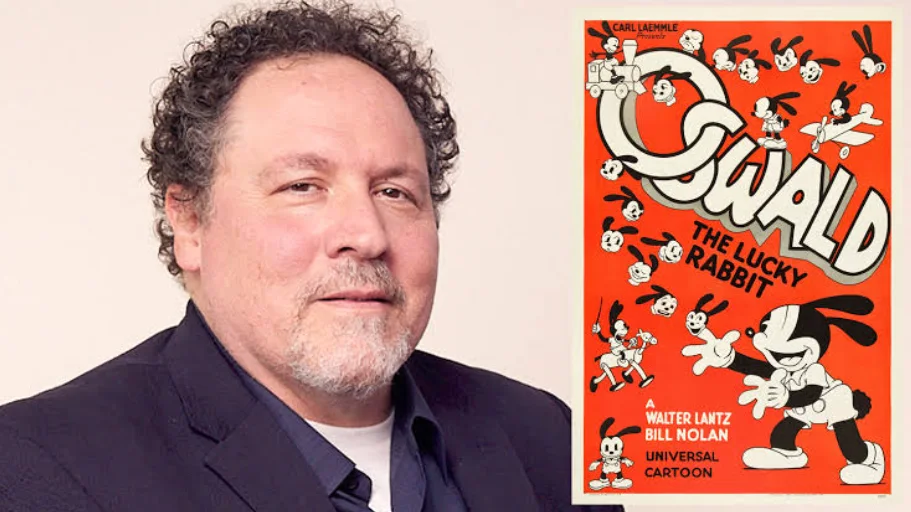
Disney revealed during its D23 Entertainment Showcase on 14 August 2026 that filmmaker Jon Favreau is developing an original series centred on the historic character.
The project, titled Oswald, will combine live-action filmmaking with animation, creating a world in which a character originating from the earliest era of animated entertainment suddenly finds himself confronting modern life.
Favreau is serving as the project's creator, writer, co-director and executive producer.
Disney also screened footage from the series for the D23 audience, giving fans their first indication of how the company intends to reinvent the character.
An earthquake brings Oswald into the modern world
Disney revealed an intriguing premise for the new production.
In the series, an earthquake releases Oswald, who has somehow remained hidden since the 1920s. A middle-school boy and his friends encounter the cartoon rabbit and attempt to help him navigate a world dramatically different from the one he knew.
That creates enormous storytelling possibilities.
Oswald comes from an age before smartphones, streaming services, social media and even modern television. Placing him alongside contemporary children gives Disney an opportunity to contrast nearly a century of cultural and technological change through the eyes of one of its earliest animated creations.
But the significance of the project extends well beyond its storyline.
The character who came before Mickey
Oswald occupies a remarkable position in Disney history.
Walt Disney and animator Ub Iwerks created Oswald during the 1920s, before Mickey Mouse became the character that would transform Disney into an international entertainment company.
A rights dispute eventually separated Walt Disney from Oswald, helping create circumstances that led Disney and Iwerks toward the development of Mickey Mouse.
Decades later, Disney regained rights to Oswald.
Since then, the character has periodically appeared in Disney games, merchandise and other projects, but he has never enjoyed anything approaching Mickey's worldwide prominence.
The new series could change that.
Rather than using Oswald primarily as a nostalgic reference for dedicated Disney fans, the company is placing him at the centre of an original modern production.
Jon Favreau takes control of another Disney property
Favreau's involvement also makes the project particularly noteworthy.
The filmmaker has played an important role in several major Disney franchises.
His work has ranged from directing Iron Man, which helped launch the Marvel Cinematic Universe, to directing Disney's The Jungle Book and The Lion King and creating The Mandalorian within the Star Wars universe.
Giving Favreau creative responsibility for Oswald suggests Disney has substantial ambitions for the character's return.
The live-action/animation format is also well suited to his experience with filmmaking that blends actors, digital environments and computer-generated characters.
Disney reaches into its own history
Entertainment companies frequently revive successful franchises, but Oswald represents something different.
Instead of bringing back a movie property from ten or twenty years ago, Disney is reaching almost a century into its creative history.
That makes the project an unusual experiment in whether a character created during the silent-animation era can be transformed into entertainment relevant to today's streaming generation.
It could also introduce millions of younger viewers to a character they may never have encountered before.
For longtime Disney enthusiasts, meanwhile, Oswald carries historical significance because his story is inseparable from the beginnings of the company itself.
Why this matters
The announcement demonstrates how valuable historic intellectual property has become in modern entertainment.
Characters do not necessarily disappear simply because decades have passed since their creation. Streaming platforms, modern animation and global distribution can give companies opportunities to reinvent them for completely different generations.
Disney has an especially enormous catalogue from which to draw.
If Oswald succeeds, it could demonstrate that the company's earliest characters can become foundations for entirely new stories rather than simply remaining pieces of animation history.
There is also an appealing irony behind the project.
Oswald was once the character Walt Disney lost before Mickey Mouse changed entertainment history. Almost 100 years later, Disney is giving that forgotten rabbit another opportunity to become a star.
The 14 August 2026 announcement therefore represents more than another television series entering production.
It is Disney reopening one of the earliest chapters of its own history and attempting to write a completely new ending for the character who came before Mickey.